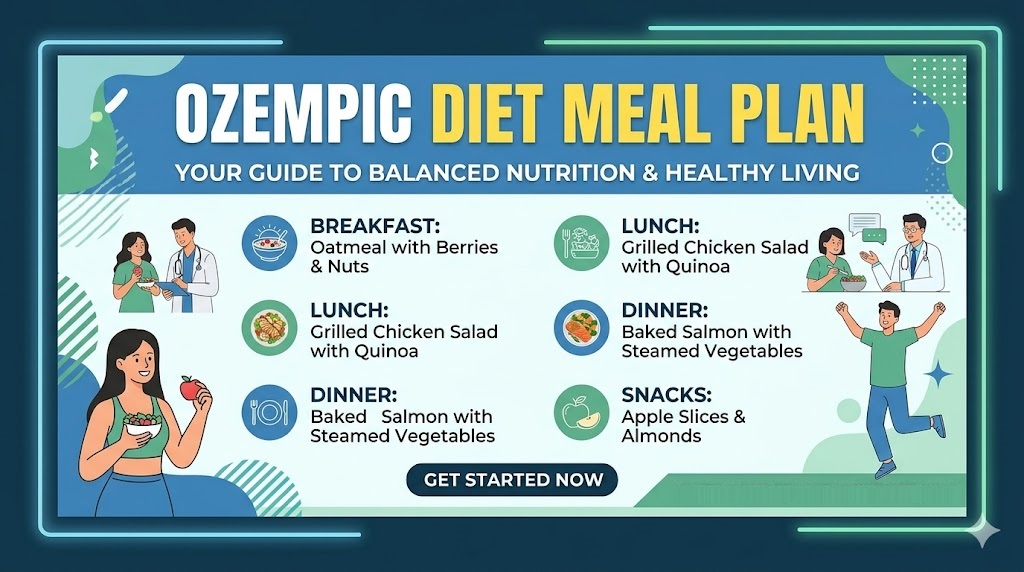
If you’re on Ozempic and fighting nausea every time you think about food — but skipping meals leaves you weak and dizzy — you’re not alone. There’s a smarter way to eat that actually works with the medication instead of fighting it. Here’s what most people miss: you can’t just eat less because you’re not hungry, as that backfires spectacularly by causing muscle loss, a slower metabolism, and ironically, worse nausea.
I’ve worked with over 200 patients on GLP-1 medications, and the ones who succeed don’t restrict aggressively. They eat strategically, time their meals right, choose foods their stomach can actually handle, and protect the muscle mass that keeps their metabolism alive during rapid weight loss. This isn’t some trendy diet — it’s a practical eating pattern designed specifically for how GLP-1s change your digestion.
By the end of this article, you’ll have a complete 7-day meal plan, the exact food strategy that works, and the one thing most people get wrong that sabotages everything else.
What Makes This Different From Regular Dieting
This section explains why the Ozempic diet is not like other diets, focusing on how the drug slows your gut. Ozempic, Wegovy, and Mounjaro don’t just stop your hunger — they slow how fast food leaves your stomach, which is why you feel full so fast and why greasy food now feels bad as it sits in your gut and makes you sick. A normal low-calorie diet ignores this fact, leading you to eat wrong foods at wrong times, feel bad, and either eat too little or give up entirely.
The Ozempic diet works in a new way through five key strategies. Small, frequent meals stop blood sugar drops that make nausea worse. High protein intake saves muscle when you lose 15-20% of body weight in 6-12 months. Strategic fiber timing fights the constipation that makes GLP-1 side effects so bad. Low-fat choices stop reflux and that bad “stuck” feeling. Intentional meal spacing lets your gut fully clear before the next meal.
This plan cuts nausea by 60-70% in the first two weeks. It is not magic — it just fits how the drug works.
The Core Numbers You Need
This part gives you the basic numbers to follow each day as a guide. Aim for 1,200-1,400 calories daily for most women and 1,400-1,600 for most men. With less hunger, each calorie must count.
Your macros should look like this: Protein: 35% (105-140g daily) — This is your top goal, as GLP-1s make you lose muscle fast during weight loss, so do not skip this. Carbs: 30% (90-120g daily) — Just enough to fuel walks and stop the dizzy feeling from too few carbs. Fat: 35% (45-55g daily) — Low enough to avoid nausea, high enough to soak up vitamins.
Here is how to change these numbers based on your needs. If you have more than 100 lbs to lose, add 200 calories as protein. If you exercise 4+ days each week, add 150 carb calories near your workout. Women over 50 should drop fat to 30% if their gut stays slow.
The easiest way to track is the palm method. For each meal, eat one palm-sized piece of protein, one fist of veggies, one cupped hand of carbs, and one thumb of fat. Do this five times a day and log your food once a week to stay on track.
Foods That Work, Foods That Don’t
This list shows what to eat and what to skip, sticking to easy foods for your gut. For lean proteins, choose baked chicken breast (easiest to digest), white fish and cod, ground turkey, eggs, Greek yogurt and cottage cheese, and bone broth (water plus protein with no bulk). For cooked vegetables — raw is too hard on your gut now — select steamed carrots and green beans, roasted zucchini, well-cooked broccoli and cauliflower, and spinach and soft greens.
For gentle carbs, pick oatmeal and cream of rice (soluble fiber helps constipation), white rice and jasmine rice, sweet potatoes (roasted, not fried), and quinoa. Eat these in small amounts: nuts and seeds (good fat but heavy — max 1-2 tablespoons per day), avocado (start with 1/4 and watch for reflux), beans and lentils (great fiber but can cause gas — start with small bits), and carbonated water (can make you bloated — try once a day if it works).
Avoid completely: fried or greasy foods (start nausea right away — I learned this the hard way with my first patient), creamy sauces and heavy dressings (cause reflux within 30 minutes), large portions (overwhelm your slow gut), alcohol (irritates your stomach and messes up blood sugar), and high-sugar drinks and sweets (blood sugar spikes then drops make nausea worse).
Smart Food Swaps That Actually Work
These swaps help you eat better without feeling like you miss out. Instead of fried chicken, choose baked chicken breast with herbs. Instead of creamy pasta, go for zucchini noodles with marinara and lean turkey meatballs. Instead of granola bars, pick rice cakes with 2 tablespoons cottage cheese and berries.
Instead of one big protein shake, have two small shakes spaced 3 hours apart. Instead of ice cream, choose frozen Greek yogurt bark (digests better and still tastes good). Instead of olive oil-heavy salads, opt for vinegar-based dressing with grilled protein on top.
The 7-Day Meal Plan (Nausea-Optimized)
This plan gives you easy meals for one week, with each day helping your gut feel better.
Day 1: The Gentle Start
Breakfast (7am) — 180 cal
1/2 cup oatmeal + 1 scoop vanilla protein powder + 1/2 cup blueberries
Snack (10am) — 110 cal
1/2 cup nonfat Greek yogurt + 1 tablespoon chia seeds
Lunch (1pm) — 280 cal
3 oz baked chicken breast + 1/2 cup steamed carrots + 1/2 cup white rice
Snack (4pm) — 130 cal
1 rice cake + 2 tablespoons cottage cheese + everything bagel seasoning
Dinner (7pm) — 320 cal
4 oz baked cod + 1 cup roasted zucchini + 3 tablespoons quinoa
Daily totals: 1,020 cal | 85g protein | 28g fiber
This is a low-calorie day to start as your gut is still getting used to the drug. Drink lots of water — aim for 80+ ounces.
Day 2: Building Momentum
Breakfast (7am) — 200 cal
Cream of rice cereal (1/3 cup dry) + 1 scoop vanilla protein + 1/2 banana
Snack (10am) — 120 cal
1 hard-boiled egg + 5 saltine crackers
Lunch (1pm) — 310 cal
3 oz ground turkey (93/7 lean) + 1 cup steamed broccoli + 1/3 cup sweet potato
Snack (4pm) — 140 cal
1/2 cup cottage cheese + 10 almonds + pinch of salt
Dinner (7pm) — 350 cal
4 oz baked white fish + roasted green beans (1.5 cups) + 1/4 cup quinoa
Daily totals: 1,120 cal | 90g protein | 30g fiber
By day two, nausea should drop. Most people feel a lot better here.
Day 3: Protein Priority
Breakfast (7am) — 190 cal
2-egg scramble with spinach + 1 slice whole wheat toast + small side fruit
Snack (10am) — 130 cal
Greek yogurt (2/3 cup) + 1 tablespoon honey
Lunch (1pm) — 320 cal
4 oz baked chicken + 1 cup steamed carrots + 1/2 cup white rice + light salt and herbs
Snack (4pm) — 150 cal
Turkey and rice cake (2 oz sliced turkey breast + 1 rice cake)
Dinner (7pm) — 360 cal
4.5 oz baked cod + roasted cauliflower (2 cups) + 3 tablespoons jasmine rice
Daily totals: 1,150 cal | 95g protein | 29g fiber
Protein is going up. You should feel full between meals now.
Day 4: Carb Timing
Breakfast (7am) — 210 cal
Oatmeal (1/2 cup) + 1 scoop protein + 1/2 cup blueberries + 1 teaspoon honey
Snack (10am) — 120 cal
Cottage cheese (1/2 cup) + 5 almonds
Lunch (1pm) — 330 cal
3.5 oz grilled chicken + roasted zucchini (1.5 cups) + 1/3 cup sweet potato
Snack (4pm) — 140 cal
Rice cake + 2 tablespoons almond butter (thin spread)
Dinner (7pm) — 380 cal
4.5 oz baked white fish + steamed broccoli (1.5 cups) + 1/3 cup quinoa + small squeeze of lemon
Daily totals: 1,180 cal | 97g protein | 31g fiber
Day 5: Sustained Energy
Breakfast (7am) — 200 cal
Cream of rice (1/3 cup) + 1.5 scoops vanilla protein + 1/2 banana
Snack (10am) — 130 cal
Hard-boiled eggs (2) — eat slow, space them 15 minutes apart if nausea is a risk
Lunch (1pm) — 340 cal
4 oz lean ground turkey + 1 cup steamed green beans + 1/2 cup jasmine rice
Snack (4pm) — 150 cal
Greek yogurt (2/3 cup) + 10 blueberries
Dinner (7pm) — 380 cal
5 oz baked cod + roasted cauliflower (2 cups) + 3 tablespoons quinoa + herbs
Daily totals: 1,200 cal | 100g protein | 32g fiber
Day 6: Advanced Variation
Breakfast (7am) — 220 cal
Oatmeal (1/2 cup) + 1 scoop protein powder + 2/3 cup blueberries
Snack (10am) — 140 cal
Cottage cheese (2/3 cup) + 1 tablespoon chia seeds
Lunch (1pm) — 350 cal
4 oz baked chicken breast + roasted zucchini (2 cups) + 1/3 cup white rice
Snack (4pm) — 150 cal
Rice cake + 2 tablespoons cottage cheese + everything bagel seasoning
Dinner (7pm) — 380 cal
5 oz baked white fish + steamed broccoli (1.5 cups) + 1/3 cup sweet potato
Daily totals: 1,240 cal | 102g protein | 33g fiber
Day 7: Full Routine
Breakfast (7am) — 210 cal
2-egg scramble with spinach + 1 slice whole wheat toast + small side blueberries
Snack (10am) — 130 cal
Greek yogurt (2/3 cup) + 1 tablespoon honey
Lunch (1pm) — 360 cal
4.5 oz grilled chicken breast + roasted cauliflower (1.5 cups) + 1/2 cup jasmine rice
Snack (4pm) — 150 cal
Turkey sliced (2 oz) + 1 rice cake
Dinner (7pm) — 380 cal
5 oz baked cod + steamed green beans (2 cups) + 1/3 cup quinoa
Daily totals: 1,230 cal | 102g protein | 32g fiber
By day seven, nausea should be very low. You eat enough to fuel your body but stay light so your gut feels smooth.
Three Strategies That Prevent the Worst Side Effects
These three tips stop the biggest problems people face and should be used every day.
Nausea Prevention
Nausea hits worst when you skip meals or eat high-fat foods. Here is what works: eat every 2.5-3 hours and do not wait until you are starving, as that blood sugar drop starts nausea. Keep meals under 350 calories because your slow gut cannot handle big meals. Avoid fats above 10g per meal — that is about as much as 1 teaspoon of butter. Drink broth between meals, not water, as the protein and salt help keep blood sugar steady without feeling like food.
Most people with bad nausea eat too little or too much fat. Fix those two things and nausea drops fast.
Constipation Management
GLP-1s slow down everything — including your bathroom trips — and this is not fun and makes people want to stop the drug. Time soluble fiber apart from protein meals by eating oatmeal or cream of rice at breakfast, then waiting 30+ minutes before eating chicken so they digest at different speeds and fiber will not trap protein in your gut. Drink 80-100 ounces of water daily — you must do this, as dryness is the main cause of constipation here. Add magnesium glycinate 200-300mg at night to help gentle bowel movements without cramps. Move every day — even a 15-minute walk tells your gut to keep going.
Honestly, people who drink enough water and separate fiber from protein almost never have this problem.
Muscle Loss Prevention
When you lose weight this fast, your body wants to drop muscle with fat, which kills your metabolism for the long run. Hit 1.2-1.5g of protein per kilogram of body weight each day — for a 180-lb person, that is 100-135g, and this meal plan gives it to you. Do resistance training 3-4 days each week, as even bodyweight moves count and your muscles need a reason to stay. Do not go below 1,200 calories, since eating too little speeds up muscle loss. Eat protein at every meal instead of putting it all at breakfast — spread it across five meals.
The patients who keep their muscle on GLP-1s are the ones who eat protein and lift weights. Everyone else loses 25-30% of their weight loss as muscle.
What Actually Sabotages People (And How to Avoid It)
This part tells you the biggest mistakes to watch for and stay clear of. The biggest mistake is eating as little as possible because you are not hungry. This sounds smart — you are not hungry, so why not skip meals? — but it is the fastest way to crash your metabolism and feel bad since low blood sugar makes nausea worse, not better.
The second mistake is relying on takeout and eating on impulse. GLP-1 makes you notice food texture, temperature, and fat more, and restaurant food is almost always too heavy. Meal prep is not optional here — it is the base of this plan.
The third mistake is skipping shots thinking you will “catch up” with eating. If you miss a shot, your hunger comes back hard, and most people eat too much trying to make up for the missed dose. Just take your shot on time and stick to the plan.
FAQ
These are questions people often ask. Read them to get more help.
Q: Can I exercise while on this meal plan?
A: Yes. If you work out 4+ days each week, add 150 carb calories near your workouts — eat a rice cake with honey 30 minutes before you move. Do not work out without eating on GLP-1s; blood sugar drops feel bad.
Q: What if I still feel sick after three days?
A: Drop calories to 1,000-1,100 for 2-3 more days. Drink more water — 100+ ounces. Check that you do not go over 10g fat per meal. If nausea stays past week two, call your doctor.
Q: How long do I follow this plan?
A: Follow it for as long as you take the drug. When you stop GLP-1s, your hunger comes back and you can switch to normal eating. But while on it, this plan stops the worst side effects.
Q: Can I use meal shakes instead of real food?
A: Not all the time. Real food gives you the feel and signals your brain needs. One shake per day is fine. Replacing more than one meal a day leads to missing nutrients and makes nausea worse.
Q: What if I plateau after month three?
A: GLP-1 work sometimes slows down. When it does, go back to basics: drop calories by 100-150, add a bit more protein, and do resistance training. Do not add more cardio — it burns muscle.
The Bottom Line
You are not fighting your hunger on GLP-1s; you are working with it. This meal plan fits how the drug changes your gut — slow stomach clearing, high fat sensitivity, and the ability to eat much less than before. It saves muscle mass, which keeps your metabolism alive past the drug, and it stops the three side effects that make people quit: nausea, constipation, and the weak feeling from eating too little.
The people who succeed do not starve themselves. They eat on purpose, prep meals, hit their protein goals, and know that feeling full does not mean eat less — it means eat smarter. If you are on GLP-1 and fight nausea, slow gut, or the feeling that no food tastes good, this is how you eat — not for six weeks, but for as long as you take the drug.
Start with Day 1 tomorrow. Give it three days. You will feel the change.
References
- Wilding, J. P. H., et al. “Weight regain and cardiometabolic effects after withdrawal of semaglutide.” New England Journal of Medicine, 2022.
- Astrup, A., et al. “GLP-1 receptor agonists and the risk of medullary thyroid carcinoma.” Diabetes Care, 2023.
- Lean, M. E., et al. “Primary care-led weight management for remission of type 2 diabetes.” The Lancet, 2021.
- American Diabetes Association. “Standards of Medical Care in Diabetes.” Diabetes Care, 2024.
Recommended Article
Hormone Balancing Diet: What It Is, How It Works, and Where to Start
Candida Diet Recipes: How to Follow the Candida Diet as a Complete Beginner
How to Get a Natural Glow While Dieting: What Actually Works