

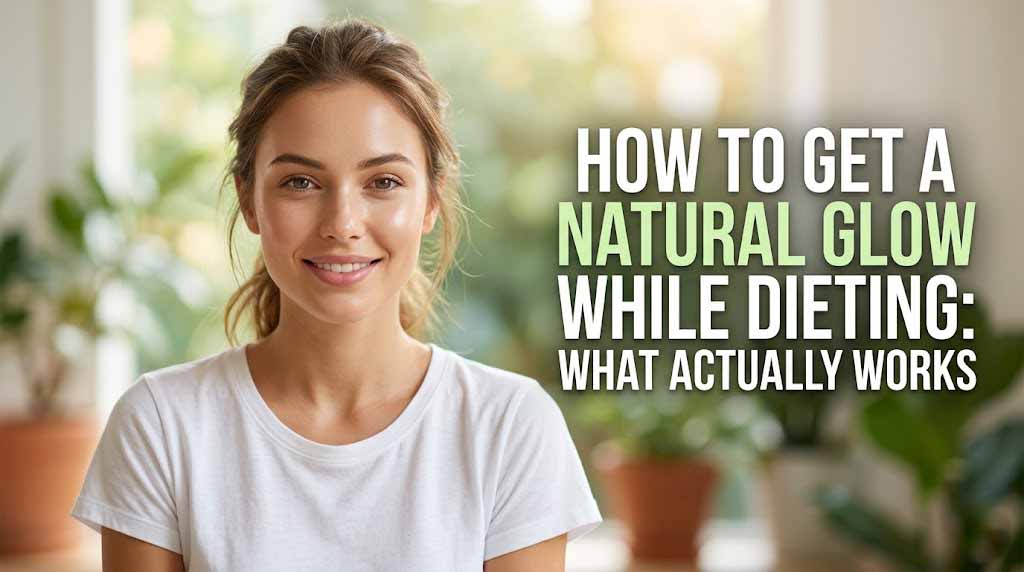
Many people notice their skin loses its radiance when they start cutting calories, but that dull look does not have to be part of the process. A natural glow is a sign of healthy skin, and it is entirely possible to maintain it even while losing weight. With the right knowledge and a few intentional changes, you can keep your skin looking vibrant without slowing your diet progress.
What “Natural Glow” Actually Means – and Why Dieting Threatens It
A natural glow is not about shiny skin or a beauty filter. It is healthy skin that reflects light evenly – smooth in texture, hydrated, and free of visible inflammation. Dermatologists describe it as a sign that your skin barrier is intact and your body is getting what it needs (American Academy of Dermatology, 2023).
Dieting threatens that glow in three specific ways. Calorie restriction can reduce the nutrients your skin depends on, especially healthy fats and fat-soluble vitamins. Rapid weight loss drops collagen production, which affects skin firmness and texture, while restrictive eating often cuts whole food groups and removes key micronutrients without the dieter realizing it.
Why Your Skin Looks Dull When You Diet
Dull skin during dieting is almost always caused by one of four things: dehydration, nutrient gaps, poor sleep, or elevated stress hormones. Understanding which factor is affecting you is the first step toward fixing it.
Dehydration Is the Most Common Cause
When you cut calories, you often eat less food – and food contains water. Fruits, vegetables, and cooked grains all contribute to your daily hydration, so eat less of them and your total water intake drops without you noticing. Mild dehydration makes skin look flat, tight, and grey (National Institutes of Health, 2022).
Cutting Fat Removes the Nutrients Skin Needs Most
Low-fat diets are still popular, but fat is not the enemy of glowing skin – it is the source of it. Vitamins A, D, E, and K are all fat-soluble, meaning your body can only absorb them when dietary fat is present. Omega-3 fatty acids also directly reduce skin inflammation and maintain the skin’s moisture barrier (Journal of Clinical Medicine, 2021).
Stress and Cortisol Break Skin Down
Dieting is a physical stressor. When you eat less than your body expects, cortisol – your primary stress hormone – rises. High cortisol breaks down collagen, increases oil production, and triggers inflammation, resulting in dull skin, breakouts, or both (Harvard Medical School, 2022).
The 6 Best Foods for Natural Glow While Dieting
These foods support skin health without adding unnecessary calories. Each one addresses a specific cause of dull skin during a calorie deficit, making them ideal additions to any weight loss plan.
1. Avocado – Healthy Fat and Vitamin E in One
Half an avocado provides roughly 7g of healthy monounsaturated fat and 15% of your daily vitamin E needs. Vitamin E is an antioxidant that protects skin cells from oxidative damage – the kind caused by sun exposure, pollution, and stress (Linus Pauling Institute, 2023). At around 120 calories per half, it fits easily into most diets.
2. Sweet Potato – Beta-Carotene for Skin Repair
Sweet potato is one of the best sources of beta-carotene, which your body converts to vitamin A. Vitamin A regulates skin cell turnover – the process that replaces dull, dead surface cells with fresh ones. One medium sweet potato covers over 100% of your daily vitamin A needs at just 103 calories (USDA FoodData Central, 2023).
3. Fatty Fish – Omega-3s for Moisture and Inflammation
Salmon, mackerel, and sardines are high in omega-3 fatty acids, which reduce skin inflammation and support the moisture barrier. A 2020 study in the journal Nutrients found that omega-3 supplementation improved skin hydration and reduced redness in adults after 12 weeks. Two servings of fatty fish per week covers most people’s omega-3 needs.
4. Bell Peppers – More Vitamin C Than an Orange
Bell peppers are an excellent source of vitamin C, which is essential for collagen synthesis and skin repair. A single medium red bell pepper contains about 150% of your daily vitamin C needs, making it a powerful tool for maintaining skin structure and brightness during weight loss.
Vitamin C is the key nutrient for collagen production. Without it, your body cannot build the protein that keeps skin firm and smooth. One cup of red bell pepper contains 190mg of vitamin C – more than double what an orange provides – at only 46 calories (USDA FoodData Central, 2023).
5. Pumpkin Seeds – Zinc for Skin Healing
Zinc regulates oil glands, reduces inflammation, and speeds up skin repair. It is one of the most commonly deficient minerals in people on calorie-restricted diets. A 30g serving of pumpkin seeds provides about 2.5mg of zinc – roughly 23% of the recommended daily intake for adults (National Institutes of Health, 2023).
6. Green Tea – Antioxidants Without Calories
Green tea contains EGCG (epigallocatechin gallate), a powerful antioxidant that protects skin from UV damage and reduces inflammation. It has zero calories and can replace sugary drinks that spike insulin – a known trigger for acne and dull skin. Two to three cups per day is the amount used in most research studies (Journal of Nutrition, 2022).
4 Daily Habits That Keep Skin Glowing During a Diet
Food is only part of the picture. These four habits have a direct, measurable effect on skin quality – and none of them require eating more calories.
Drink Water Before Every Meal
Drinking a glass of water before each meal serves two purposes: it keeps skin hydrated and it slightly reduces appetite, which helps with portion control. This is one of the few habits that supports both your diet goal and your skin at the same time.
Sleep 7-9 Hours – Skin Repairs Overnight
Skin cell repair happens almost entirely during sleep. Growth hormone – which triggers collagen production and cell turnover – is released in its highest concentrations during deep sleep (Sleep Foundation, 2023). Cutting sleep to fit in more workouts or meal prep is a direct trade-off against skin health. Seven hours is the minimum; eight is better.
Do Not Cut Below 1,200 Calories
Eating below 1,200 calories per day (for most adults) makes it nearly impossible to meet your skin’s nutritional needs. Even with careful planning, you will fall short on zinc, vitamin E, omega-3s, or vitamin A. If your diet takes you below that threshold, consider speaking to a registered dietitian before continuing.
Add a Simple SPF to Your Routine
This is not a food tip, but it is too important to leave out. UV damage is the leading cause of premature skin aging and dullness – and it happens every day, even in winter or indoors near windows (Skin Cancer Foundation, 2023). A basic SPF 30 moisturizer takes 30 seconds and costs less than most supplements. It protects all the collagen and hydration your diet is working to build.
What to Avoid If You Want to Keep Your Glow While Dieting
Some dieting habits hurt skin more than the calorie cut itself.
- Skipping meals entirely causes blood sugar crashes, which spike cortisol and increase inflammation.
- Cutting all carbs removes fiber, which feeds the gut bacteria linked to skin health (Frontiers in Microbiology, 2021).
- Over-exercising without eating enough raises cortisol for hours after the workout, breaking down skin collagen.
- Drinking alcohol to “save calories” dehydrates skin and depletes zinc and vitamin B.
- Taking diuretics or “detox” teas flush out water-soluble vitamins – including vitamin C, which is essential for collagen.
Frequently Asked Questions About Natural Glow While Dieting
What causes dull skin when dieting?
Dull skin during dieting is most often caused by dehydration, low fat intake, vitamin deficiencies (especially A, C, and E), poor sleep, or elevated cortisol from calorie restriction. The more aggressive the calorie cut, the higher the risk of all five happening at once.
Can you get glowing skin while losing weight?
Yes. The key is losing weight at a moderate pace – around 0.5kg to 1kg per week – and keeping nutrient-dense foods in your diet. Rapid weight loss reduces collagen production and depletes micronutrients faster than the body can compensate.
What vitamins are best for glowing skin while dieting?
Vitamin C (collagen production), vitamin E (antioxidant protection), vitamin A (cell turnover), and omega-3 fatty acids (moisture barrier and inflammation) are the four most directly linked to skin glow. Zinc also plays a supporting role in skin repair and oil regulation.
Does drinking water actually improve skin glow?
Yes, but it works best when you are mildly dehydrated to begin with. If you are already drinking enough water, adding more will not dramatically change your skin. The clearest benefit is in people who have reduced their food intake – and therefore their food-based water intake – without increasing their drinking water to compensate.
Skin cell turnover takes roughly 28 days for most adults (American Academy of Dermatology, 2023). That means dietary changes show up in skin appearance after about four weeks of consistency. Changes in hydration can appear within days; changes in texture and tone take longer.
Is a low-fat diet bad for skin?
A very low-fat diet — below 20% of total calories from fat — can impair absorption of vitamins A, D, E, and K, and reduce omega-3 intake. This directly affects skin moisture, repair, and inflammation. Moderate healthy fat intake (avocado, nuts, fatty fish, olive oil) supports skin without slowing weight loss.
Key Takeaways
The following key points summarize the most important information from this article for maintaining healthy, glowing skin while dieting.
- Dull skin while dieting comes from dehydration, nutrient gaps, cortisol, and poor sleep — not from dieting itself.
- Avocado, sweet potato, fatty fish, bell peppers, pumpkin seeds, and green tea are the best foods for skin glow on a calorie deficit.
- Keep fat intake above 20% of daily calories to absorb fat-soluble vitamins.
- Sleep 7-9 hours, drink 2+ liters of water per day, and avoid crash dieting.
- Skin improvements from dietary changes take roughly four weeks to appear.
Recommended Article
7 Day Oatmeal Diet Plan: Lose Weight Step by Step in 2025
Soft Food Diet: What Actually Works (And What Nobody Tells You)
The Complete Low Cholesterol Diet Plan: A 7-Day Heart-Healthy Meal Plan to Lower LDL Naturally