

Here’s the truth: You don’t need to spend a fortune or dedicate your life to meal prep to eat whole foods. And you definitely don’t need to be perfect about it. I’ve worked with hundreds of people trying to break free from the diet-and-fail cycle, and the ones who succeed aren’t the ones following rigid plans—they’re the ones who make small, sustainable swaps and actually stick with them.
If you’ve felt trapped by restrictive dieting, overwhelmed by conflicting nutrition advice, or convinced that healthy eating requires time and money you don’t have, this article is for you. I’m going to walk you through 10 practical swaps that fit into real life—not Instagram life. Keep reading to the end, because there’s something I’ve saved for later that most people completely overlook, and it’s the one shift that actually makes everything stick.
By the time you finish, you’ll understand why most people fail at healthy eating (it’s not what you think), and you’ll have a concrete roadmap to do it differently.
What You Need to Know About Whole Foods—Right Now
Let’s be clear on what we mean when we say “whole foods.” Whole foods are food in its most natural form—fresh fruit instead of fruit juice, whole grains instead of refined flour, and real nuts instead of snack mixes. The goal is not perfection; it is progress. Frozen broccoli from a cheap store counts, and so does a can of beans from your shelf. You do not need organic food or fancy stores—you just need real food.
Here is what changes when you eat this way: Your fiber goes up (aim for 25–35 grams each day), which helps your stomach work better and keeps you feeling full longer. Your blood sugar stays stable because you do not spike it with added sugar (keep sugar under 25g for women, 36g for men). Your body gets more vitamins and good stuff, reducing your risk for long-term sickness, and your energy stays steady—you do not crash at 2 p.m. The biggest lie is that you need to be perfect. You do not—you just need to make small, smart choices.
The 10 Swaps That Actually Work
1. Follow the “5-Ingredient Rule” (And Do Not Stress Over It)
The idea is simple: Look at a packaged food. If it has more than five things on the list, or words you cannot pronounce, it is probably too processed. This works because many processed foods are designed to hook you with additives that make you want more.
Here’s how to do this: Pick three packaged foods you buy the most and start with those. Read the label and ask yourself, “Do I know what this is?” If you do not, that tells you something. Use the “I do not know that word” test—it works well. The catch is that some good foods (like tomato sauce or nut butters) have more than five ingredients, so do not be a jerk about this rule. Use your brain and common sense. This rule alone helps people pick better food without any big sacrifice—just paying attention.
2. Shop the Walls—But Know the Middle Has Good Stuff Too
The idea here is that fresh food lives on the outside of the store, but the middle aisles have plenty of good food too. Start by hitting the walls first: get your fresh produce, meat, eggs, and milk. Then, go to the middle aisles with purpose for smart picks like canned beans, rice, oats, frozen veggies, olive oil, and nuts—these are whole foods too.
To do this successfully, make a list before you go, grab fresh food from the walls, then enter the middle aisles intentionally rather than wandering aimlessly. Ignore health buzzwords on boxes—”organic” does not mean whole, and “natural” means nothing. One big mistake people make is thinking frozen veggies are bad. They are not. Frozen food is picked when it is ripe and flash-frozen, so it can actually be better than fresh food that sat around for days. Use frozen food without guilt—your wallet and your time will thank you.
3. Learn the “Three Thing Meal” Trick
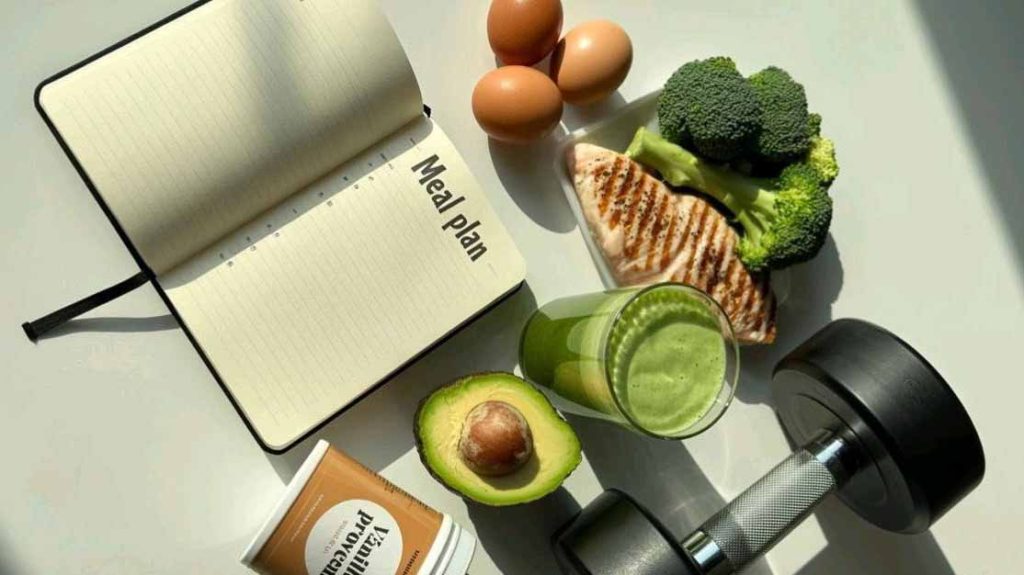
This trick solves the biggest problem of healthy eating: time. Simply pick one protein, one veggie, and one carb, cook it simply, and eat it. The formula is straightforward: protein (chicken, fish, eggs, beans), veggie (broccoli, spinach, peppers—fresh or frozen), and carb (rice, sweet potato, oats, whole grain bread). Cook a big batch on Sunday and eat it all week.
Real meals include chicken with broccoli and rice, turkey with lettuce and black beans, salmon with green beans and sweet potato, or eggs with spinach and toast. The truth is this is not fancy and it will not win prizes on Instagram, but it works and you can keep doing it. When people stop trying to make every meal “special,” they eat better and the stress goes away.
4. Fix Your Breakfast (Your Oatmeal Packet Is Lying to You)
The problem is that most “healthy” breakfast foods are loaded with sugar. A flavored oatmeal packet has 10–12 grams of sugar, which is like eating cake for breakfast—then you crash by 10 a.m. The swaps are simple: replace flavored oatmeal with plain oats plus banana and nut butter; swap sugary cereal for plain yogurt with berries and a little granola; choose whole grain toast with egg and avocado instead of pastries; and pick plain yogurt with a little honey and nuts over flavored yogurt.
This matters because when your blood sugar stays steady, you are not hungry until lunch, and you make better choices all day. Do not feel bad that breakfast takes time—toast and eggs take five minutes, and overnight oats take five minutes at night. This is time you need for your health.
5. Know the “Dirty Dozen” of Fake Healthy Foods
Lots of foods look healthy but are actually packed with sugar, bad oils, or additives. The biggest offenders include flavored yogurt (same sugar as candy), granola (up to 15 grams of sugar per serving), bottled salad dressing, plant-based meat (very processed), most whole grain breads, deli meats, low-fat anything (they add sugar when they remove fat), protein bars, smoothie bowls (40+ grams of sugar), store-bought hummus, and bottled overnight oats.
Here is how to handle these traps: Buy plain yogurt and add your own fruit and nuts. Make your own dressing with oil, vinegar, and mustard. Read labels on deli meat and pick options with less salt. Buy fresh bread from a bakery. You do not need to stop eating these foods entirely—just know what you are eating. When you see the sugar in “healthy” yogurt, you will naturally pick something else.
6. Use the 80/20 Rule (Here Is How)
The truth is that trying to be perfect will make you miserable and it does not last. Instead, eat whole foods 80% of the time and eat whatever you want 20% of the time—that works. To do this right, eat whole foods on weekdays and let yourself enjoy treats on weekends or special occasions. The 20% is not “I will eat junk”—it is “I choose to enjoy this.” Do not feel guilty about it, because that defeats the whole purpose.
Here is what I see consistently: People who use the 80/20 rule stick with it long-term. People who try for 100% either nail it (which takes tons of willpower) or they fail and binge on everything. Both extremes are unsustainable. The 80/20 rule gives you balance—it is not a diet but freedom. Do not use the 20% to dump all your emotions; use it on purpose, enjoy it, then move on.
7. Use Frozen and Canned Food (No Guilt)
The lie is that “real” healthy food has to be fresh. The truth is that frozen and canned food can actually be better than fresh. Frozen veggies are picked when ripe and frozen immediately, locking in nutrients. Canned fruit is preserved at its best (just buy the kind with no added sugar). Canned beans are whole foods packed with protein and fiber. Plus, there is no waste because they last forever.
What to buy: frozen broccoli, spinach, mixed veggies, berries, and mango; canned beans (black, pinto, chickpea), lentils, and tomatoes; canned fish like salmon and tuna for real protein. One tip is to check the salt on canned goods and rinse beans to reduce sodium, but do not skip them because of salt. Frozen veggies have changed how I eat—no prep, no waste, always available. I use them more than fresh now, and this one swap makes healthy eating easy for busy people.
8. Cook on Sunday (Keep It Simple)
The idea is simple: cook once and eat four times. You do not need fancy meal prep containers—just pick a protein, cook a large batch, and use it different ways all week. A sample Sunday prep takes about two hours and includes baking 4 chicken breasts with salt, pepper, oil, and lemon; cooking a big pot of brown rice; roasting frozen broccoli, carrots, and Brussels sprouts; and cooking a batch of black beans.
Here is how to use it: Monday is chicken with rice and veggies; Tuesday is chicken tacos with tortillas and toppings; Wednesday is chicken salad with mayonnaise and celery on bread; Thursday is a chicken and rice bowl with a different sauce. You are not cooking the same meal four times—you are cooking components and mixing them creatively. This is the thing that makes people stick with healthy eating because when you know “I already cooked, I just need to put it together,” it becomes effortless.
9. Drink Water. Really.
The swap is straightforward: replace soda, juice, sweet tea, and energy drinks with water. This is a big deal because your body does not count liquid calories the same way—you can drink 300 calories of soda and still feel hungry, but eat 300 calories of nuts and you feel full. Soda packs 35–40 grams of sugar per can, juice has 20–30 grams with no fiber, and many “natural” drinks can be worse than soda.
To make the switch, replace one sugary drink with water each day, add lemon or cucumber if plain water is boring, keep a water bottle with you, and continue drinking coffee or tea (just skip the sugar). I am not saying never drink soda, but if you drink it every day, stopping that alone may be the single best change you make. One client lost 12 pounds in three months just by switching from soda to water—nothing else changed.
10. Stop Calling It a Diet
The real change is mindset: This is not a diet you “go on”—this is how you eat now. Diets have an end, so when you hit your goal or get bored, you stop and revert to old habits, ending up where you started. Eating whole foods is not a diet but a new way to think about food. A diet is strict, short, and all about what you cannot have, while a lifestyle is doable, flexible, and all about what you add (good stuff, not restrictions).
To make this stick, stop saying “cheat day” and say “I choose to treat myself.” Stop labeling food as “bad” or “good”—food is just a choice, not a moral judgment. Focus on what you gain (energy, clear thinking, good sleep) rather than what you lose, and celebrate small wins like better sleep and more energy, not just the number on the scale. This new way of thinking is what changes people for good. When you stop fighting and start choosing, it gets easy.
The One Thing to Remember
If you do nothing else from this article, do this: Stop trying to be perfect. Think about your next meal, not the next month. Make one small swap this week, then another next week. Small steps add up, and that is how real change lasts.
FAQ
Q: Can I eat whole foods on a small budget? Yes. Buy frozen veggies, canned beans, eggs, rice, and oats—these are the cheapest whole foods available. Skip organic if you need to; regular broccoli is still whole food.
Q: How long until I see results? Your energy improves in 2–3 weeks, and your body changes in 4–8 weeks. However, most people notice better sleep and clearer thinking first.
Q: Do I need to stop all carbs? No. Whole grain carbs like brown rice, oats, sweet potatoes, and whole grain bread are excellent because they contain fiber and nutrients. Just cut back on white bread, white pasta, and sugary cereal.
Q: What if my family will not eat this way? Cook the basic components (protein, veggie, carb) and let each person add their own toppings. A chicken breast with rice and broccoli can have different flavors for different people—no need to make two separate meals.
Q: Can I do this for a long time? Yes—if you use the 80/20 rule and stop calling it a diet. The moment you think of it as strict, it fails. Think of it as “how I eat now,” and then it sticks.
What This Means for You
You came here to eat better without turning your life upside down, and that is exactly what this is—a plan for real people with real lives. The 10 swaps here are not extreme; they are simple, small enough to try, and big enough to change everything. Start with one: maybe it is swapping flavored oatmeal for plain oats, or buying frozen veggies, or cooking one batch on Sunday. When that feels normal, add another.
The people who win at this are not superhuman or perfect. They simply stopped waiting for perfection and started with one small choice. Your next step is to pick one swap from this list, do it for one week, and notice what changes. That is how this works—one small choice at a time.
Recommended Article
Candida Diet Recipes: How to Follow the Candida Diet as a Complete Beginner
How to Get a Natural Glow While Dieting: What Actually Works