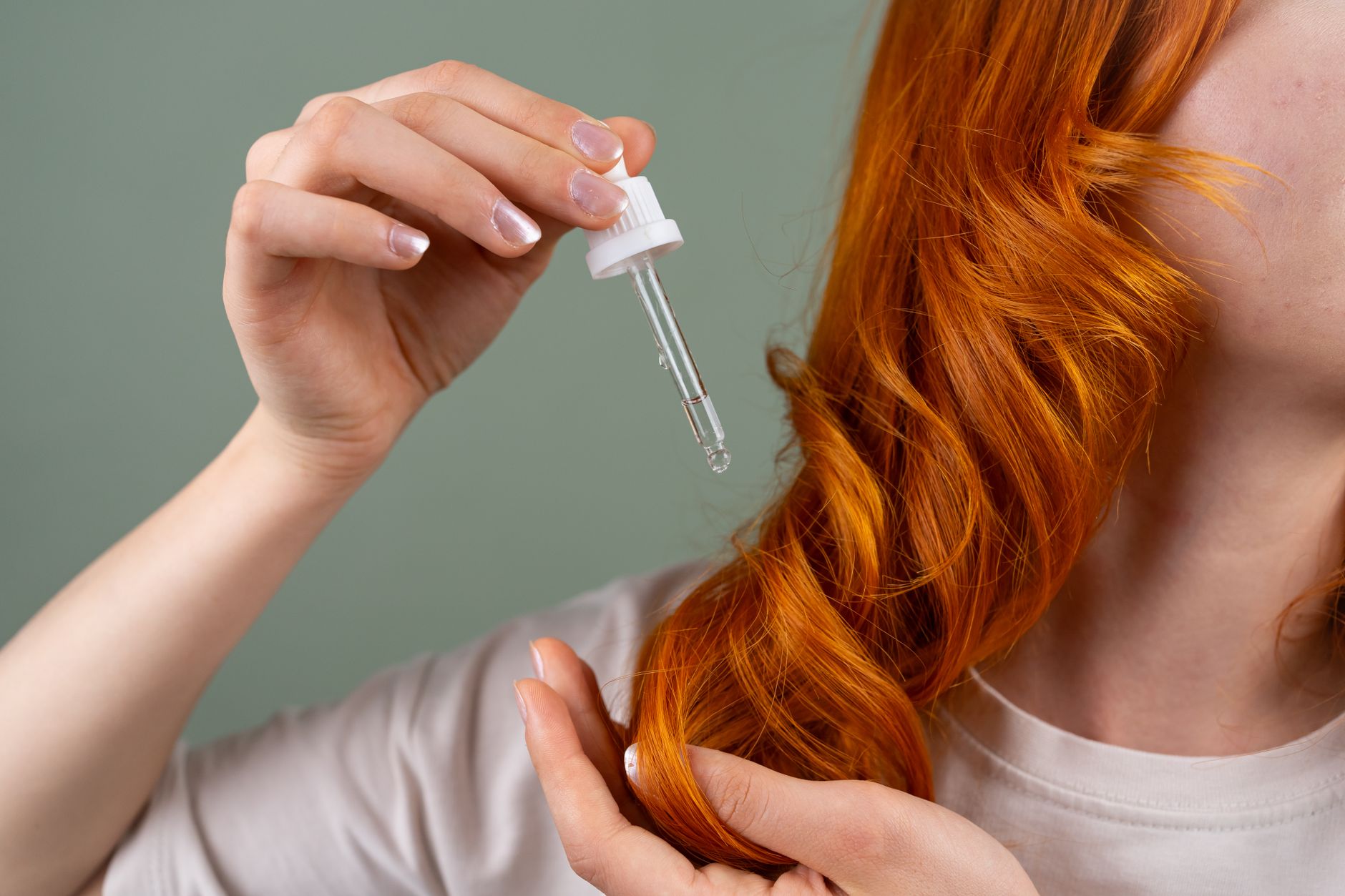
9 Coconut Oil Hair Treatment Ideas That Actually Fit Your Hair Type
Key Takeaways
- Start with a pre-shampoo treatment (also called a pre-poo): 1 to 2 teaspoons on mid-lengths and ends, 20 to 30 minutes before you wash. It’s the lowest-risk way to use coconut oil on almost any hair type.
- Dose by length and density, not by handful. Fine or short hair often needs under a teaspoon. Long, coarse, or coily hair can take 2 to 3 teaspoons, warmed between your palms first.
- Dwell time: 20 to 30 minutes handles most needs. Overnight suits coarse, high-porosity, very dry hair. On fine hair it usually reads as limp and flat the next day.
- Placement fixes greasiness before it happens. Keep the oil off your roots if you’re prone to build-up, flaking, or small bumps along your hairline, and treat ends only.
- What it does: softens, adds slip and shine, and helps hair survive detangling and washing with less breakage. What it doesn’t do: make hair grow faster or thicker.
- Wash it out on dry hair first. Work shampoo into the oil before water goes anywhere near it, or you’ll be rinsing four times.
Published: September 5, 2026 | Last updated: September 5, 2026
Two decisions decide whether coconut oil leaves your hair soft and glossy or flat and stringy: how much you use, and where you put it. Recipe, brand, and add-ins matter far less than those two. Half a teaspoon smoothed through damp ends behaves nothing like the same half teaspoon raked from your scalp down.
Coconut oil earns its reputation on feel. It softens, adds slip so a comb glides instead of snagging, boosts shine, and helps hair get through detangling and washing with less breakage. That last point deserves separating from a claim you’ll see everywhere: less breakage isn’t the same as more growth. Coconut oil isn’t a growth treatment, and no oil is.
Below are nine ways to use it, each with an amount, a dwell time, and the hair types it actually suits.
Two more things come with the list. The first is a match-up section that pairs hair length, density, and porosity with a specific amount and a dwell time, so you’re not guessing between 20 minutes and a full night. The second is a wash-out method built around emulsifying, which is what ends the endless rinse cycle most people blame on the oil itself.
The nine treatments sit at different points in a wash routine. A few go on dry hair before shampoo, when the oil has the best chance to limit how much water the shaft takes on. Others go on damp hair afterward, in much smaller amounts, purely for slip and shine. Two are scalp-focused, and those carry the clearest limits, because an irritated or flaking scalp is a different problem than dry ends.
Every entry names four things: how much oil, where it goes, how long it stays, and who it suits. Where a pairing genuinely helps – honey for softness, aloe for lighter conditioning, a diluted essential oil for a scalp massage – you get the ratio or dilution, not just the ingredient name.
Frequency gets a straight answer too. Once a week suits a lot of hair types, and you’ll see when twice is reasonable and when once a month is plenty.
Then comes the part most guides skip: who should leave coconut oil alone. Fine hair that flattens easily, protein-sensitive hair, scalps prone to persistent flaking, and anyone with a coconut allergy all belong in that group. There’s also a short list of scalp and shedding signs worth a dermatologist’s opinion rather than a mask. All of this is general beauty and self-care information, not medical advice.
Key Takeaways
- Dose by length and density, not by feel: roughly 1/2 to 1 teaspoon for short or fine hair, up to 2 to 3 teaspoons for long or coarse hair.
- Mid-lengths and ends are the safe default. Scalp application is optional and situational.
- 20 to 30 minutes covers most needs. Overnight suits coarse, dry, high-porosity hair, not fine or protein-sensitive hair.
- Fine or low-porosity hair: smallest dose, ends only, or switch to fractionated coconut oil.
- Emulsify before rinsing, oil first and water second, and clarify only when build-up is real.
- Less breakage from grooming is a fair expectation. Faster growth isn’t.
Important: Sudden shedding, patchy bald spots, a painful or oozing scalp, or flaking that keeps returning no matter what you use call for a dermatologist, not a DIY mask. Oil won’t resolve an underlying scalp or hair-loss problem, and MedlinePlus’s overview of common hair and scalp problems is a better starting point than another treatment.
What Coconut Oil Does for Hair, and What It Cannot Do
Coconut oil is a conditioner that works partly inside the hair, not only on the surface. Expect softer texture, more shine, and easier detangling. Don’t expect faster growth, thicker strands, or repair of damage that’s already done.
The difference comes down to structure. Coconut oil is mostly lauric acid, a small, straight-chain fatty acid packed into compact triglycerides (the three-part fat molecules that make up most oils). Small and straight means some of it slips past the cuticle scales and settles inside the shaft instead of sitting on top. Hair that’s partly filled with oil takes on less water during a wash, so it swells and shrinks less. That repeated swelling, sometimes called hygral fatigue, stresses the cuticle, and swollen wet hair loses more protein when it’s stretched and combed. Less swelling plus less friction adds up to fewer snapped ends over weeks of normal washing and styling.
So does it grow hair? Not in the way that phrase implies. Growth happens at the follicle, below the skin, shaped by genetics, hormones, age, nutrition, medication, and general health. An oil sitting on the shaft doesn’t reach that. What it can do is help you keep what you grow. When ends snap off about as fast as new length arrives, hair looks stuck at one point; cut the breakage and the same growth rate finally shows. That’s retained length, not faster growth, and the distinction matters when you’re judging results at week six.
The wording used in marketing blurs this, so keep two lists straight. Fair to expect: conditions, softens, adds shine, improves manageability, and reduces breakage from brushing and detangling. Not supported: repairs damage (a split end can’t be rejoined), regrows hair, thickens strands, or cures dandruff. A dry scalp may feel more comfortable for a day or two, but flaking tied to yeast overgrowth or a skin condition needs different care, and oil can make it worse.
The reduced-protein-loss idea traces back to a frequently cited 2003 paper in the Journal of Cosmetic Science, which gets quoted secondhand far more often than it gets read. Treat it as a reasonable signal from lab-tested hair samples rather than a measured promise for the hair on your head. For general context on the oil itself and its fatty acid makeup, Harvard T.H. Chan School of Public Health’s food feature on coconut oil is a level-headed read.
One caveat before the recipes: coconut oil doesn’t suit every head of hair. If yours is fine, protein-sensitive, or quick to feel coated, the hair-type matching section and the cautions section further down cover the workarounds and the reasons some people are better off skipping it.
Virgin, Refined, or Fractionated: Choosing Your Oil
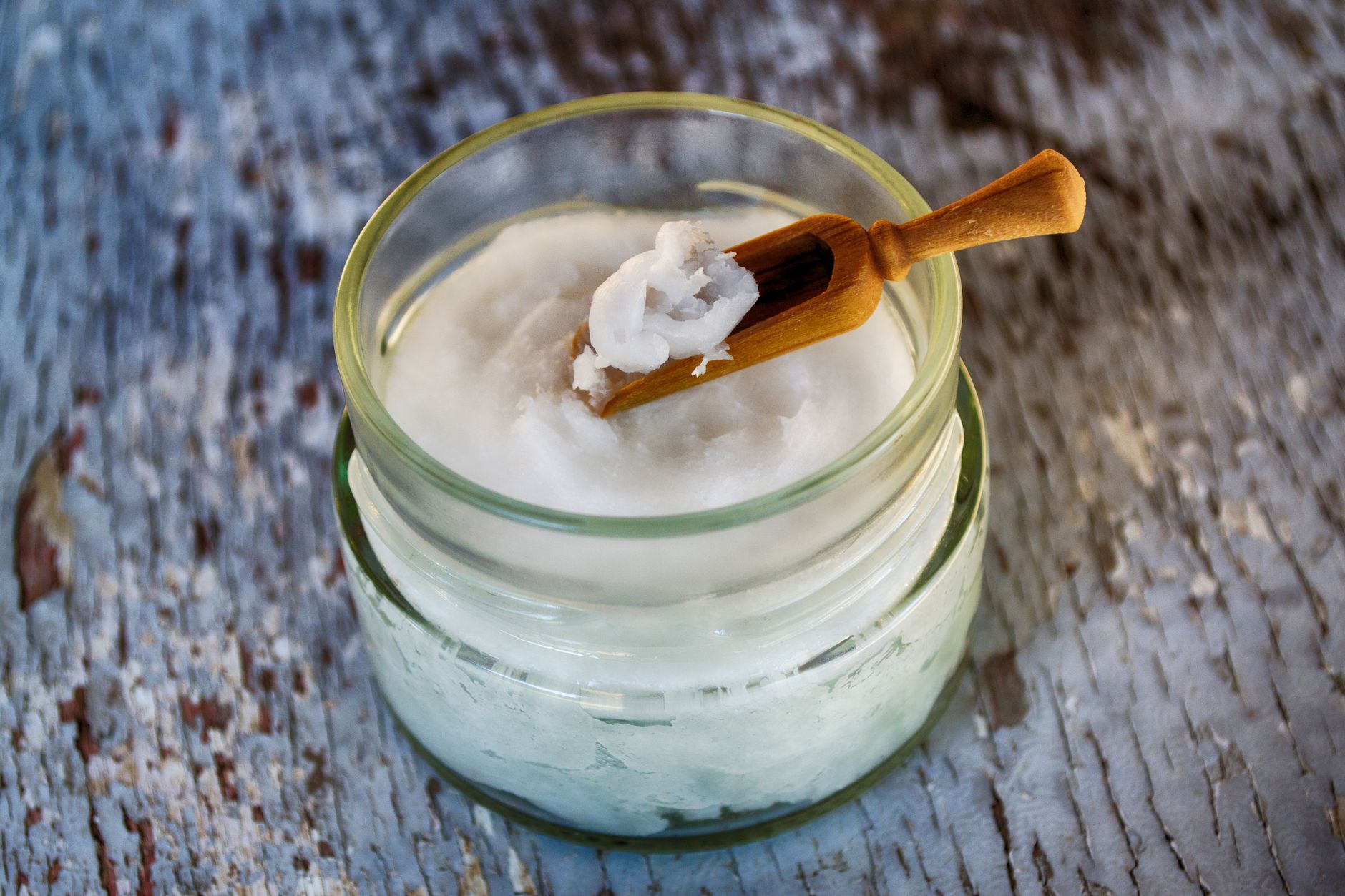
Virgin coconut oil (also labeled unrefined or cold-pressed) is the default for masks and pre-shampoo treatments. Refined is the pick if the coconut smell bothers you. Fractionated coconut oil, often sold as MCT oil, stays liquid at room temperature and feels lightest, which makes it the friendlier choice for fine or low-porosity hair and for leave-in use.
| Type | Texture at room temp | Scent | Weight on hair | Best use | Typical cost |
|---|---|---|---|---|---|
| Virgin / unrefined (cold-pressed) | Solid below roughly 76°F (24°C) | Clear coconut smell | Heaviest | Deep masks, pre-shampoo, dry ends | $ to $$ |
| Refined | Solid, similar melt point | Neutral to nearly none | Close to virgin | Masks when scent is a dealbreaker | $ |
| Fractionated (MCT) | Liquid at any room temp | Almost odorless | Lightest | Leave-in sealing, scalp massage, fine or low-porosity hair | $$ |
Store the jar somewhere cool and dark, and keep water out of it. Wet fingers shorten shelf life, so scoop with a dry spoon. To soften, set the closed jar or a small dish in a bowl of warm water for a few minutes, or rub solid oil between your palms until it turns clear. Skip the microwave and the stovetop entirely. Overheated oil can scald your scalp, and there’s no payoff beyond comfortable warmth. Test a drop on your inner wrist first.
Good to Know: coconut allergy is uncommon but real. Before a first full application, dab a little oil behind your ear or on your inner forearm and wait 24 hours to watch for redness, itching, or bumps.
9 Coconut Oil Hair Treatment Ideas
Each idea below tells you who it suits, how much oil to use, how long to leave it on, and how to rinse it out. Start with the first one – it’s the lowest-risk version. One or two treatments a week is plenty, and once every two weeks if your roots fall flat easily.
1. The 20-Minute Pre-Shampoo Coat (Pre-Poo)
Best for almost any hair type, including fine hair, because it rinses out with your normal wash. On dry, brushed hair, warm 1 to 2 teaspoons between your palms (up to 3 for long or dense hair) and smooth it from mid-shaft to ends. Skip the scalp. Comb through, clip it up, and wait 20 minutes. Work shampoo into the oiled hair before adding water, then rinse. Skip if your scalp is broken out or flaking heavily.
2. Overnight Deep Conditioning Mask for Dry Mid-Lengths and Ends
Best for coarse, dry, high-porosity, or heat-styled hair. Coat mid-lengths and ends with 2 to 3 teaspoons, braid or bun the length, and cover with a satin scarf or an old pillowcase. Shampoo it out in the morning. Repeated soaking and drying can leave strands limp and overstretched (hygral fatigue), so keep overnight sessions to once a week – or get most of the benefit in 2 to 3 hours. Skip if your hair already feels mushy when wet.
3. Warm Cap Treatment for Coarse or Resistant Hair
Best for thick strands that oil struggles to spread through. Apply from mid-shaft down, cover with a shower cap, then wrap a warm damp towel over the top for 15 to 20 minutes. Gentle warmth improves slip and coverage; that’s the whole point. No blow dryer on the cap, no heated oil, nothing that feels more than comfortably warm. Rinse with shampoo. Skip if your scalp is irritated, since warmth can intensify itching.
4. Weekly Scalp Massage With Diluted Rosemary or Peppermint
Best for a dry, tight-feeling scalp. Dilute 2 to 3 drops of essential oil per tablespoon of coconut oil, part your hair in rows, and apply sparingly. Massage 3 to 5 minutes with fingertips, never nails. Treat it as comfort and circulation, not a growth treatment. Leave 30 minutes, then shampoo. Keep oils away from your eyes, and ask your doctor before using essential oils in pregnancy or on children.
5. Coconut Oil and Honey Softening Mask
Best for lengths that feel dry, dull, or rough to the touch. Mix 1 tablespoon melted coconut oil with 1 teaspoon raw honey until the honey fully disperses; undissolved honey turns sticky and clings in patches. A few drops of warm water thin the blend so it spreads instead of dragging.
Work it through damp mid-lengths and ends, clip hair up, and leave it 20 to 30 minutes. Rinse with lukewarm water first to lift most of the honey, then shampoo. Skipping that water rinse is what leaves people scrubbing three times.
6. Aloe and Coconut Sealing Step for Curls and Coils (LOC/LCO)
Best for curls and coils that lose moisture within a day. LOC means liquid, oil, cream; LCO reverses the last two. Either way, water goes first. Mist a section damp, smooth on aloe vera gel or your leave-in, then finish with a pinhead-sized amount of coconut oil rubbed between your palms.
Work in four to six sections on damp – not soaking – hair, praying-hands style down the length. Too much shows up fast: strands clump together, your hands stay slick after application, and curls look wet at hour six instead of defined.
7. Fine-Hair Friendly Fractionated Oil Mist
Best for fine or low-density hair that flattens under regular coconut oil. Add half a teaspoon of fractionated coconut oil to a 2-ounce spray bottle of water, shake hard, and mist 1 to 2 pumps onto the bottom two inches only. Never the roots.
Use it on damp ends before styling, or on dry ends after washing to soften split-looking tips. The rule that saves fine hair: use less than you think you need, then reassess tomorrow rather than adding more now.
8. Banana or Yogurt Smoothing Mask
Best for frizz-prone hair that needs slip without heavy oil. Blend half a ripe banana or 2 tablespoons plain yogurt with 1 teaspoon coconut oil, then push the mixture through a fine mesh sieve. Unstrained banana bits wedge between strands and take ages to comb out.
Keep dwell time short, 15 to 20 minutes, then rinse thoroughly before shampooing. Yogurt contributes milk protein, so if your hair stiffens or snaps after protein treatments, choose the banana version instead.
9. Pre-Swim and Protective-Style Prep
Best for chlorine, salt water, and long-worn styles. Coat damp hair with a thin layer 10 minutes before swimming so the strand absorbs less pool water. Before braids, twists, or a wig install, use a light coating for detangling slip – and keep it off the scalp, since oil under a style worn for weeks turns into build-up you can’t rinse away.
Match the Treatment to Your Hair Type and Porosity
Greasy results usually trace back to dose, not dwell time. Start with the smallest amount that coats your ends, then adjust up.
Dose and Dwell-Time Matrix
| Hair length and density | Dose in teaspoons | Placement | Dwell time | Removal |
|---|---|---|---|---|
| Short or fine, low density | 1/4 to 1/2 tsp | Ends and mid-shaft only | 20-30 minutes | One emulsified cleanse |
| Shoulder length, medium density | 1/2 to 1 tsp | Mid-shaft to ends | 30-60 minutes | Emulsify, rinse, repeat once |
| Long or thick, high density | 1 to 2 tsp | Mid-shaft and ends | 1 hour to overnight | Double cleanse |
| Coarse, curly or coily | 2 to 3 tsp | Roots to ends | Overnight | Double cleanse |
Porosity and Texture Notes
Low-porosity hair takes the least oil and needs help getting in: apply to damp hair under a shower cap for gentle warmth. High-porosity hair drinks it up, so a heavier dose and longer dwell make sense. Fine, low-density hair does best with fractionated oil on the ends only, applied after washing. Coarse, curly and coily textures tolerate the most.
If coconut oil leaves your hair stiff or straw-like, that’s protein sensitivity showing up. Cut the dose, shorten dwell time, and follow with a moisture-rich conditioner.
A 4-Week Rotation to Copy
One treatment per week is plenty:
| Week | Treatment | Timing |
|---|---|---|
| Week 1 | Pre-shampoo oil, mid-shaft to ends | Night before wash day |
| Week 2 | Scalp massage | 1 hour before washing |
| Week 3 | Deep mask under a warm cap | Wash day |
| Week 4 | Leave-in sealing on damp ends | After washing |
Skip overnight masks, root-to-tip oiling and leave-in sealing if your hair is fine, oily at the roots, or prone to build-up. A 20-minute pre-shampoo on the ends is your version, and the cautions section below covers build-up rescue.
How to Wash Coconut Oil Out Without Greasy Roots

Shampoo goes on before water. Oil and water repel each other, so wetting hair first leaves shampoo diluted and sliding off. Emulsify first:
- Start with dry, oil-coated hair.
- Squeeze shampoo onto the oiliest sections and work it into a thick paste.
- Add water in small splashes, massaging until the paste turns milky.
- Rinse fully, then do a shorter second cleanse.
A second cleanse is warranted after overnight masks or scalp application. Use a clarifying shampoo if roots still feel coated once dry. If you have hard water or swim often, a chelating shampoo lifts the mineral film that traps oil – monthly at most, since frequent use dries hair out.
A diluted apple cider vinegar rinse adds slip and lifts leftover film, but it’s not required. Mix 1 tablespoon ACV into 1 cup cool water, pour it over mid-lengths after your final cleanse, wait a minute, then rinse. Skip it on an irritated scalp.
Greasy Hair Rescue
Do a root-only wash first. Clip the ends up, shampoo the scalp and first inch, then rinse with lukewarm water so you don’t re-coat the lengths.
Can’t wash yet? Tap 1/4 teaspoon cornstarch or arrowroot powder onto the roots with a soft brush, leave it 5 minutes, then brush it out. It blots surface oil without dry shampoo.
Three things make it worse: blasting hot water, scrubbing with your nails, and two clarifying washes back to back, which strips the ends you were trying to condition.
Mistakes, Safety Notes, and Answers to Common Questions
Mistakes That Ruin the Result
- Using a palmful when half a teaspoon works
- Oiling the scalp when the dryness is on your ends
- Overnight masks nightly instead of once or twice weekly
- Applying to unwashed roots, which traps sebum and product
- Layering over shea butter until hair feels waxy
- Treating it as a heat protectant – it isn’t one
- Expecting it to mend split ends; only a trim removes them
Safety and Patch Testing
Patch test behind your ear and wait 24 hours, especially if coconut bothers you in food or cosmetics. Dilute essential oils heavily, and ask your clinician before using them in pregnancy or on children. Warm oil to skin temperature, never hot, and keep it out of your eyes. Wipe the tub – oil films are slippery. Acne-prone? Stay off the hairline to limit clogged pores and folliculitis. Flaking is different: the yeast behind dandruff and seborrheic dermatitis feeds on certain scalp lipids, so oiling can backfire – NHS advice on treating dandruff is the better starting point, and the AAD covers general scalp care.
When to See a Dermatologist
Book a visit for sudden shedding, coin-shaped bald patches, or a scalp that’s painful, oozing, or flaking despite treatment; the NHS overview of hair loss causes explains what’s typical. This is general information, not medical advice.
Frequently Asked Questions
How Long Should Coconut Oil Stay in Your Hair, and Is Overnight Safe?
Twenty to 30 minutes suits most hair. Overnight fits coarse or high-porosity strands only, and once or twice a week is the ceiling either way.
Does coconut oil make hair grow faster or thicker?
No. Coconut oil won’t speed up growth or change how thick each strand is. Growth happens at the follicle, below the skin, and an oil sitting on the shaft can’t reach it. What it can do is help you keep the length you already grow. Coconut oil absorbs into the hair shaft and appears to reduce protein loss during washing and grooming, so strands break less when you detangle or towel-dry. Sudden or patchy shedding is a different question – the MedlinePlus overview of hair problems is a good starting point.
Why does my hair feel dry or straw-like after using coconut oil?
Usually too much, too often, or protein sensitivity. Coconut oil helps hair hold onto its own protein, and some hair – often fine or low-porosity – reads that as stiff rather than soft. Repeated soak-and-dry cycles, called hygral fatigue, leave strands rough and limp too. Drop to about half a teaspoon on mid-lengths and ends, once every 10 to 14 days, and skip overnight wear. If it still feels like straw, switch to a lighter oil – jojoba or grapeseed coat rather than penetrate – and follow with a moisture-rich conditioner.
Is coconut oil okay on a flaky or itchy scalp?
It depends on what’s causing the flakes. Dandruff and seborrheic dermatitis involve a scalp yeast that feeds on oils, so adding more can push itching and flaking further; a medicated anti-dandruff shampoo works better there. A tight, dry-feeling scalp usually handles a small amount massaged in before washing. Want the conditioning without the risk? Keep the oil from mid-lengths down and leave the scalp bare. Stop and have it looked at if you notice redness, tenderness, pus-filled bumps, or flaking that keeps spreading.
Can I use coconut oil on color-treated or chemically relaxed hair?
Yes, as a pre-shampoo treatment – just not right around a chemical service. Twenty to 30 minutes of oil before washing adds slip and cuts the breakage that comes with detangling processed hair. Skip it for a day or two before bleach, permanent color, a relaxer, or a smoothing service, since residue can affect how evenly the chemical takes. Give freshly processed hair a few days to settle before oiling again, and let your stylist’s timing override any general rule. Strand-test a hidden section first, since vivid reds and pastels can shift with any oil-and-water soak.
Should I use virgin or refined coconut oil?
Either works – pick by smell and feel. Both are mostly lauric acid triglycerides, the part small enough to move into the hair shaft, so conditioning performance is close. Virgin (unrefined) keeps the coconut scent and trace plant compounds; refined is neutral and cheaper, which matters if you dislike lingering fragrance. The one to skip for penetration is fractionated coconut oil, sold as MCT oil – lauric acid is removed to keep it liquid, so it sits on the surface more than it absorbs.
How do I get coconut oil out without washing three times?
Use less, and shampoo before you wet your hair. Work shampoo directly into the oiled strands first so it grabs the oil, then add water slowly and lather – one pass usually clears it. A sulfate or clarifying shampoo cuts through faster than a sulfate-free formula. If you still need a second wash every time, you applied too much: a half to one teaspoon covers most mid-length hair, and hair that’s damp rather than dripping takes up oil more evenly.
Does coconut oil work as a heat protectant?
No – don’t rely on it for hot tools. Virgin coconut oil starts to smoke around 350°F (177°C), and flat irons and curling wands commonly run 300 to 450°F, so oil left on the strands can scorch instead of shield. Keep coconut oil in the pre-shampoo slot, wash it out, then use a product formulated for heat before styling. A trace of oil smoothed over dry, styled ends afterward is fine, since no heat follows.
Bottom Line
Coconut oil earns its reputation in one specific job: a 20 to 30 minute pre-shampoo treatment that reduces protein loss and makes wet detangling gentler. Start with about a teaspoon on mid-lengths and ends, once a week or every other week, and adjust down if hair feels stiff or limp. Keep it off a flaky, itchy scalp, skip it before chemical services, and treat sudden or patchy shedding as a question for a clinician rather than a conditioning problem.