15 Best Foods for Hair Growth and Less Hair Fall
Key Takeaways
- Protein, iron, zinc, vitamin D, and omega-3 fats do most of the work for hair, and food covers them for many people without a single supplement.
- Hair grows slowly. Expect roughly 3-6 months before you notice less shedding or new baby hairs along your part.
- Shedding often shows up 2-3 months after the trigger – a crash diet, illness, high fever, or a stressful stretch – so what you see now may reflect what happened in spring.
- Pairing changes absorption. Add vitamin C to plant-based iron, and keep zinc away from high-dose iron or calcium supplements.
- Food supports the hair you’re growing today. It doesn’t override genetics, thyroid problems, or an autoimmune cause.
Most hair advice skips the part that actually matters: your diet only shapes the hair that’s forming right now, deep in the follicle. It can’t rewrite your genetics, and it won’t fix a medical cause of shedding on its own. That’s not a reason to ignore what’s on your plate – the follicle is one of the busiest tissues in your body, and it needs raw material daily. What follows is a grocery-level list of 15 foods for hair growth, the nutrient doing the work in each one, how to actually eat it, and an honest timeline for when the difference shows up in the mirror.
How Food Affects Hair Growth and Hair Fall
Food feeds the follicle, not the strand. The hair on your head is already dead protein – nothing you eat or apply changes what’s grown out. Nutrition acts one layer down, inside the follicle, where cells divide fast and pull nutrients from your bloodstream around the clock.
Every follicle moves through three phases. Anagen is the active growing phase, lasting a few years. Catagen is a short transition. Telogen is the resting phase that ends when the hair releases and sheds. At any moment, most of your hair sits in anagen while a smaller share rests.
When your body faces a shortage – too few calories, low iron stores, not enough protein – it protects vital functions first. Hair is expendable by comparison. Follicles get pushed out of anagen early and into telogen together, then shed as a group roughly two to three months later. Clinicians call this pattern telogen effluvium, and it’s one reason hair loss often traces back to an event weeks earlier rather than something you did yesterday.
Here’s what that timing means in practice: food influences the hair your follicles are about to build, not the strands already on your head. Hair that’s grown past the scalp is dead protein – no smoothie changes it. What you eat now shapes the fiber forming inside the follicle over the coming weeks.
So give it time. Hair grows slowly by design, which is why it usually takes roughly three to six months of steady, adequate eating before you notice less shedding in the drain or short new hairs along your part.
One boundary worth being clear about: eating well supports healthy hair, but it doesn’t treat hair loss conditions. Pattern hair thinning and alopecia areata have their own causes and their own medical options, and no grocery list replaces that.
Important: More isn’t better. Filling a nutrient gap helps; overshooting can backfire. Very high intakes of vitamin A and selenium, usually from supplements rather than meals, have been linked to shedding. Food first is the safer default.
15 Best Foods for Hair Growth and Less Hair Fall
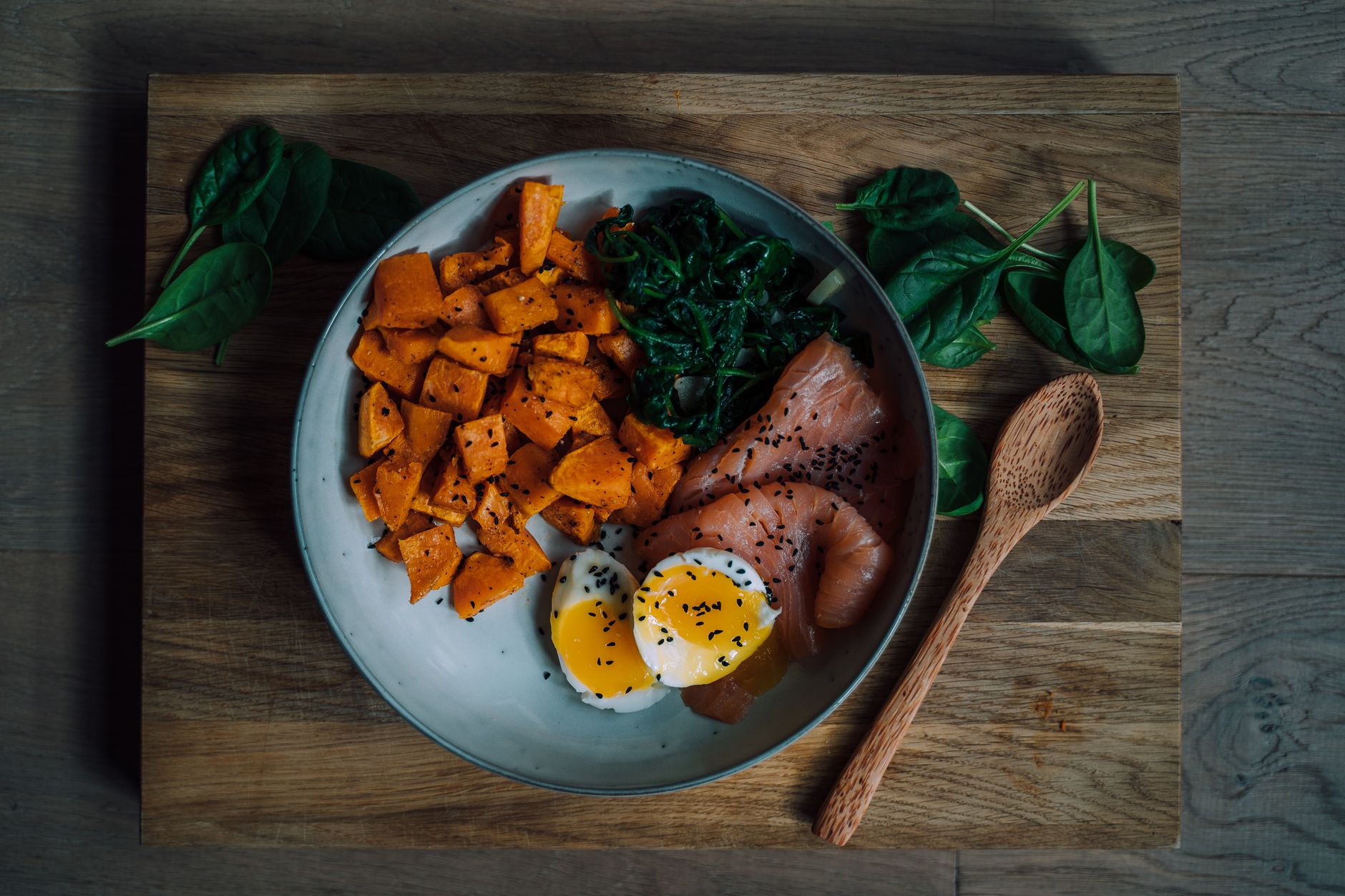
The foods worth prioritizing deliver protein, iron, zinc, or omega-3 fats – the raw materials follicles draw on while they build new strands. No single one carries the whole job. For each, here’s the nutrient it brings, why that matters for hair, and a realistic way to eat it.
1. Eggs
Main nutrients: complete protein and biotin.
Eggs supply every amino acid your body uses to build keratin, the structural protein hair is made of, including sulfur-rich cysteine. They’re also one of the more concentrated whole-food sources of biotin, a B vitamin involved in keratin production.
How to eat it: two eggs give you roughly 12 grams of protein. Keep the yolk – that’s where the biotin and vitamin A sit.
2. Salmon
Main nutrients: long-chain omega-3 fats (EPA and DHA), protein, vitamin D.
Your scalp is skin, and omega-3 fats help the skin barrier hold moisture, so dryness and flaking become less of a daily battle. A 4-ounce cooked fillet also delivers around 25 grams of protein.
How to eat it: one or two servings a week. Canned and frozen both count, and they cost less than fresh.
3. Sardines
Main nutrients: omega-3 fats, vitamin D, heme iron.
Sardines bring the same EPA and DHA as salmon in a cheaper tin, plus a useful amount of heme iron – the form your body absorbs more easily than plant iron. The soft edible bones add calcium.
How to eat it: mash a tin onto toast with lemon, or fold one into a salad.
4. Greek Yogurt
Main nutrients: protein, vitamin B12, calcium.
A cup of plain Greek yogurt carries 15 to 20 grams of protein without any cooking. Its B12 supports normal red blood cell production, which is how oxygen reaches the follicle.
How to eat it: unsweetened, with berries and pumpkin seeds on top.
5. Chicken and Turkey
Main nutrients: complete protein, the amino acids used to build keratin.
Hair is mostly keratin, and keratin is built from amino acids in your food. Poultry keeps your protein floor steady, which matters most in a calorie deficit.
How to eat it: 4 to 6 ounces gives you roughly 30 to 40 grams.
6. Lean Beef
Main nutrients: heme iron, zinc, protein.
Beef gives you iron and zinc in the same bite, and low iron stores are a known factor in shedding – especially for women with heavy periods.
How to eat it: two or three modest servings a week.
7. Oysters
Main nutrients: zinc, vitamin B12, protein.
Oysters are among the highest-zinc foods you can eat, and follicles use zinc for tissue growth and repair. More isn’t better, though – high-dose zinc supplements can interfere with copper absorption.
How to eat it: canned smoked oysters count if fresh feels like a stretch.
8. Lentils
Main nutrients: plant protein, non-heme iron, folate.
A cup of cooked lentils brings about 18 grams of protein plus non-heme iron, the plant form your body absorbs less easily. Pair it with vitamin C – lemon juice, tomatoes, peppers.
How to eat it: soup, dal, or a big lentil salad that lasts three days.
9. Chickpeas
Main nutrients: protein, zinc, non-heme iron, vitamin B6.
Chickpeas cover several hair-relevant nutrients at once, which helps if you eat little meat and need to close a protein and mineral gap.
How to eat it: roast a tin for snacking, or blend into hummus with lemon.
10. Pumpkin Seeds
Main nutrients: zinc, magnesium, plant iron.
A small handful adds real zinc without a supplement bottle, and it upgrades snacks you’re already eating.
How to eat it: a tablespoon or two over yogurt, oats, or salad.
11. Walnuts
Main nutrients: ALA omega-3 fat, copper, vitamin E.
Walnuts supply ALA, the plant form of omega-3, plus copper, which is involved in normal hair pigmentation. Useful if fish isn’t part of your week.
How to eat it: a small handful, about 1 ounce, most days.
12. Chia and Flaxseeds
Main nutrients: ALA omega-3 fat, fiber, plant protein.
Both seeds give ALA plus a little protein, and flax needs grinding – whole seeds can pass through undigested.
How to eat it: a tablespoon of ground flax or chia in yogurt, oats, or a smoothie.
13. Spinach
Main nutrients: non-heme iron, folate, beta-carotene.
Non-heme iron is the plant form, and your body absorbs less of it than iron from meat, so what you pair with it matters.
How to eat it: wilted into scrambled eggs, or raw with a citrus dressing.
14. Sweet Potato
Main nutrients: beta-carotene, which your body converts to vitamin A.
Vitamin A is involved in normal skin and scalp cell turnover, and food-based beta-carotene avoids the risks tied to high-dose supplements.
How to eat it: roasted in olive oil – a little fat improves absorption.
15. Berries
Main nutrients: vitamin C, polyphenols.
Vitamin C supports collagen formation and boosts absorption of plant iron, so berries work best next to an iron-rich meal rather than alone.
How to eat it: a cup with breakfast; frozen is just as good.
Easy Swaps for Vegetarian, Vegan, and Tight-Budget Eating
Every food here has a stand-in – these are substitutions, not compromises. Swap salmon for cheaper canned sardines or mackerel. Use tofu, tempeh, beans, or lentils where the list says meat. Fortified breakfast cereals add iron and B vitamins cheaply. Vegans need a reliable vitamin B12 source, such as fortified foods or a supplement discussed with a clinician.
Nutrient Pairings That Help Absorption – and What Not to Overdo
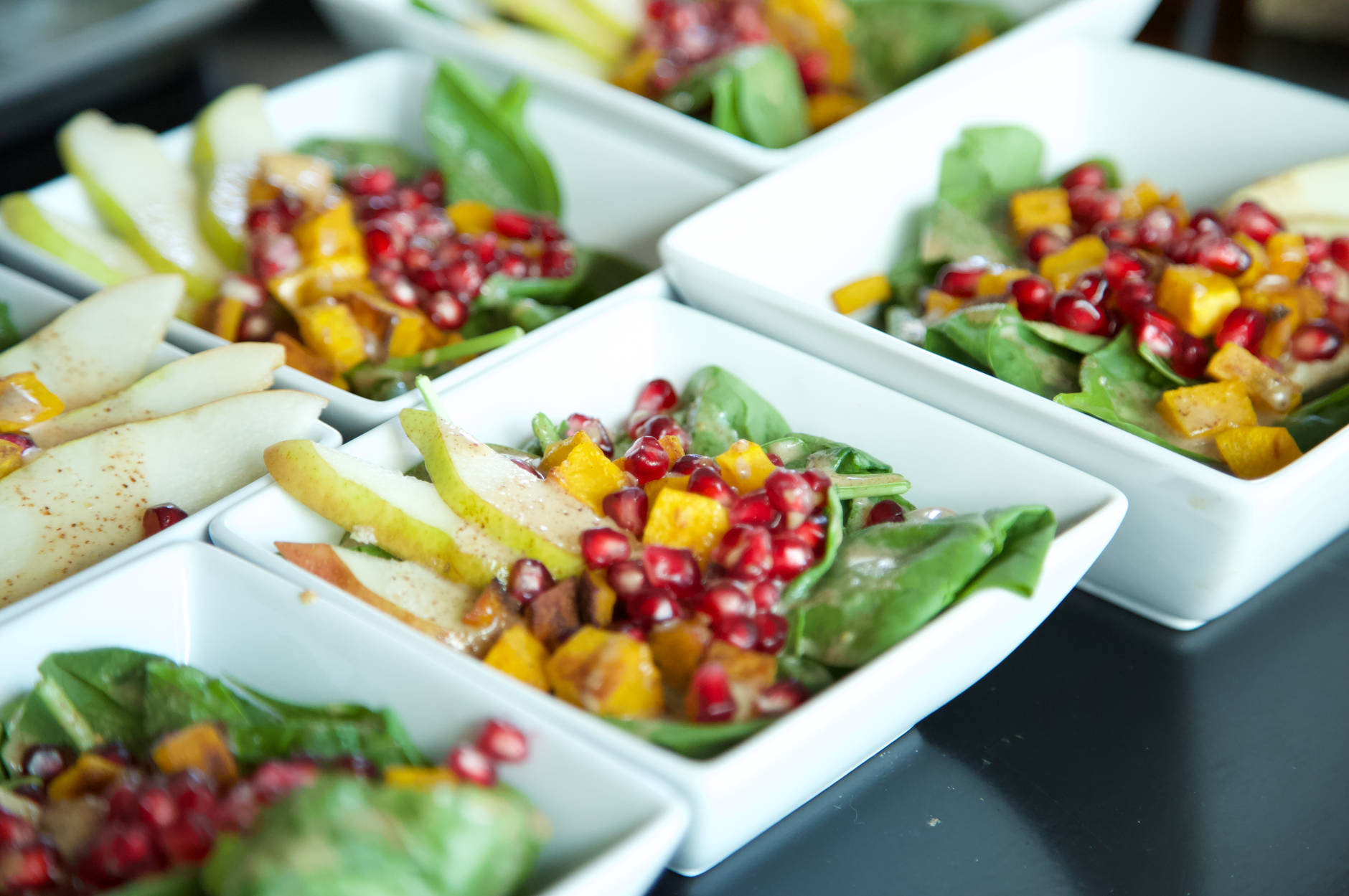
Combinations matter as much as the foods themselves. Vitamin C makes plant iron easier to absorb, and a few habits work against it.
Pairings Worth Remembering
- Plant iron + vitamin C: lentils with roasted peppers, or spinach with orange
- Beta-carotene + fat: sweet potato roasted in olive oil
- Zinc away from high-dose iron or calcium: they compete for absorption
- Tea and coffee between meals, not with them: both reduce iron absorption
A Simple Day of Eating
- Breakfast: Greek yogurt, berries, a tablespoon of pumpkin seeds
- Lunch: lentil salad with red pepper, spinach, olive oil
- Snack: a boiled egg or a small handful of walnuts
- Dinner: salmon or tofu, roasted sweet potato, sautéed greens
Why More Is Not Better
Overdoing certain nutrients can backfire: excess vitamin A and selenium are both linked to hair shedding. High-dose biotin can distort lab results, so mention it before any blood work. Supplement only when a clinician identifies a deficiency – unsupervised iron carries a real overload risk. If you’re pregnant or trying to conceive, be careful with high-dose vitamin A and retinol forms.
Hair Fall During Weight Loss: What to Fix First
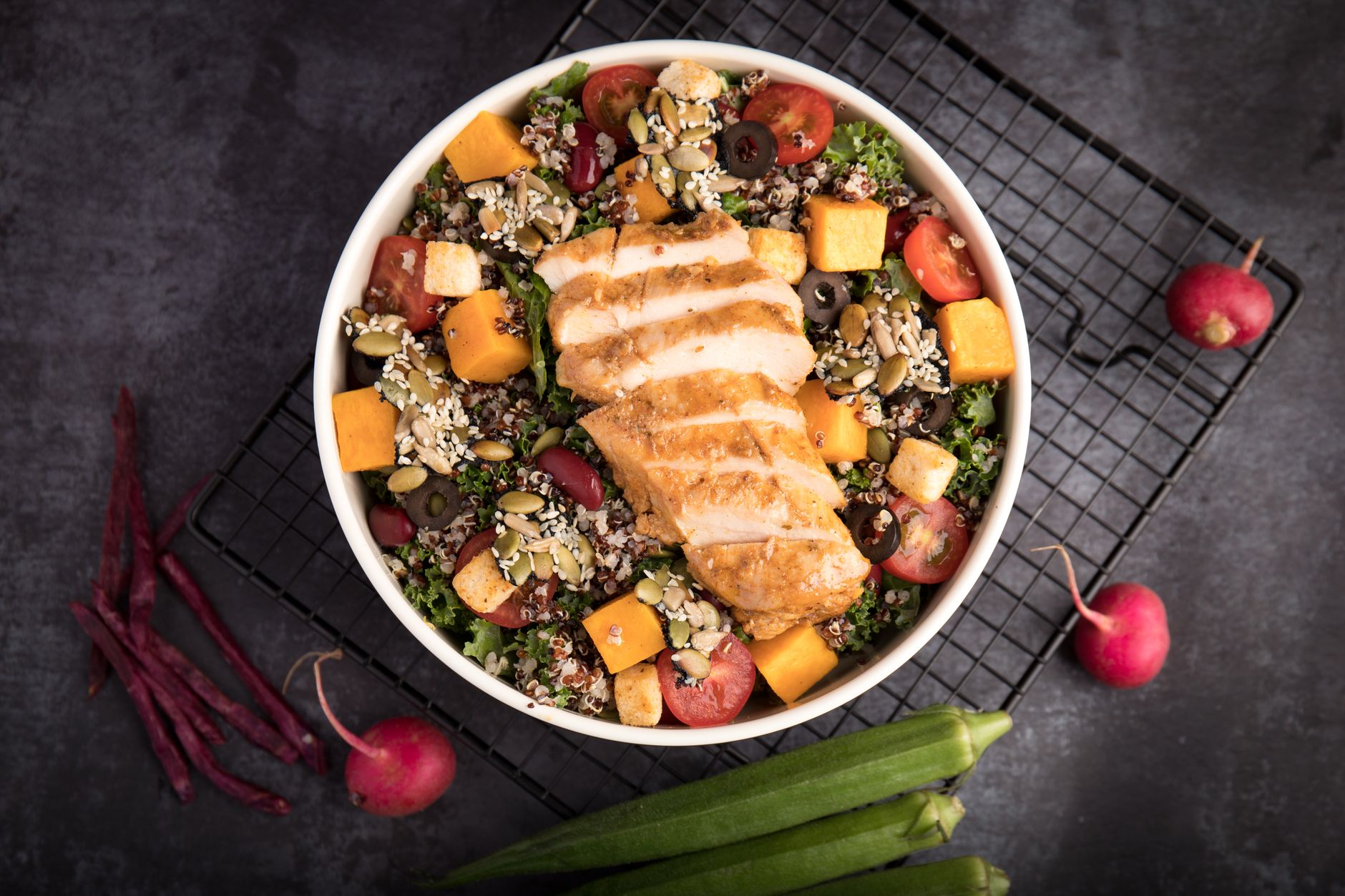
Rapid weight loss is a recognized shedding trigger. When calories drop sharply, the body protects essential functions first and pushes more follicles into their resting phase at once. The shedding shows up 2 to 3 months later, which is why the diet and the hair fall rarely feel connected.
Fix it in this order:
- Calories first. A very low intake undermines everything else on this list.
- Protein at each meal. Spread it across breakfast, lunch and dinner instead of loading it all at night.
- Iron and nutrient density. Fewer calories means fewer chances to get iron, zinc and omega-3s in, so make each plate count.
Eating “healthy” doesn’t guarantee adequacy. Small portions, cut food groups and skipped meals quietly shrink your daily totals. A slower pace you can hold for months is kinder to your hair than a fast drop.
Signs Your Hair Loss Needs More Than a Grocery List
Food helps when nutrition is the gap – it can’t address everything. Check in with your doctor or a dermatologist if you notice:
- Sudden shedding, or smooth round patches of loss
- Scalp scaling, redness, burning or pain
- A part that keeps widening, or thinning at the crown
- Shedding that continues past 3 months
- Signs pointing to thyroid or low iron: fatigue, feeling cold, heavy periods
Two patterns food won’t resolve: pattern hair loss (androgenetic alopecia), which is hormonal and genetic, and alopecia areata, an autoimmune condition that causes patchy loss. Both have treatment paths, and both tend to go better when looked at early.
A visit is usually straightforward: your history, a look at your scalp and hair, and often bloodwork such as ferritin (stored iron), thyroid function and vitamin D. The point isn’t to label you with something. It’s to see what’s driving the shedding so the plan fits the cause.
While you wait for an appointment, keep eating well and write down when the shedding started, plus any diet changes, new medications, illness or major stress in the past 4 months. That timeline is often the most useful thing you bring with you.
Hair Growth Food Questions, Answered
Do I need a hair supplement, or is food enough?
For most people eating enough overall, food covers it. Supplements help when they correct a real shortfall, not as general insurance. If you suspect low iron or vitamin D, ask for a test before you start taking either. Biotin supplements rarely change anything unless you’re genuinely deficient, which isn’t common.
Can food stop postpartum hair shedding?
No, but good nutrition helps you get through it more comfortably. Postpartum shedding is usually telogen effluvium. Pregnancy hormones kept more hairs in their growing phase, and after birth a large batch shifts into shedding at once. It typically settles on its own over several months. Food’s job here is to keep a second trigger from stacking on top: enough calories, a protein source at every meal, and iron-rich foods, especially if blood loss at delivery was significant or you’re breastfeeding.
Will eating extra protein make my hair grow faster?
Not beyond what your body actually needs. Protein prevents a shortfall, but it isn’t a growth accelerator, and hair grows at a pace set mostly by genetics, age and overall health. If you already get a steady protein source at each meal, adding another shake won’t shorten the cycle. Extra attention pays off in specific situations: during a calorie deficit, while recovering from illness or surgery, or if breakfast and lunch are light and dinner carries everything.
Can diet help with genetic hair thinning?
Food supports the hair you still have, but it doesn’t change the pattern. Androgenetic alopecia, also called female pattern hair loss, comes down to genetics and how sensitive your follicles are to hormones. No food, smoothie or seed blend redirects that. Eating well still matters, because low iron or a crash diet layered on top of pattern thinning makes the loss look and feel much faster. For the pattern itself, treatment options exist, and a dermatologist can explain which ones suit you.
Is a vegetarian or vegan diet a problem for hair?
It doesn’t have to be, but it needs a bit of planning. Two things deserve attention: total protein and iron. Plant iron is absorbed less readily than iron from meat, so pair lentils, tofu, beans and fortified cereal with a vitamin C food at the same meal. Keep zinc, vitamin B12 and omega-3s on your radar too, and use fortified foods or a supplement for B12 on a vegan diet. Build each plate around a real protein anchor.
The Bottom Line
If you change only three things, make them these: a protein source at every meal, iron-rich foods paired with vitamin C, and enough total food to support your day. Eggs, oily fish like salmon or sardines, and lentils with a citrus or bell pepper side cover most of the ground on their own. Give any change 3 to 6 months before you judge it, since you’re waiting on the growth cycle rather than the food itself. And if shedding keeps going past that, comes on suddenly, or arrives with scalp pain or scaling, get it looked at rather than eating your way around it.