When you are trying to lose weight, every calorie matters, but some of the biggest diet saboteurs wear a healthy disguise. The foods most likely to stop your progress are often the ones marketed as nutritious choices that you eat without guilt. Understanding which seemingly smart options are actually undermining your efforts can make the difference between stalled results and real, consistent progress.
In this article, we break down the 10 most common foods that stop weight loss, why they are so problematic, and what to swap them for. You will learn how hidden sugars, calorie density, and misleading labels can quietly add hundreds of extra calories to your day without making you feel any fuller.
If you are short on time, here is everything you need to know about the foods that stop weight loss and how to replace them. These key takeaways will help you immediately spot problem items and make smarter choices without overhauling your entire diet.
- Flavored yogurt, granola, and fruit juice are regularly marketed as healthy but carry as much sugar as dessert
- “Low-fat” labeled foods often replace fat with added sugar, which spikes insulin and drives fat storage
- Liquid calories from smoothies, coffee drinks, and sports drinks are the most under-counted calories in most people’s diets
- Switching these 10 foods for lower-calorie alternatives can remove 400-800 calories from your day without changing meal structure
- The foods on this list are not inherently bad – the problem is portion size, frequency, and misleading serving labels
Why “Healthy” Foods Are the Hardest Diet Killers to Spot
The foods most likely to stop your weight loss are not pizza or cake. Those are easy to account for. The real problem is the foods you eat without guilt – the ones with health halos, the ones in the “better for you” aisle, the ones that come in small packages but pack a surprisingly large calorie count. A 2022 analysis published in the BMJ found that ultra-processed foods now make up 57% of daily calorie intake for the average American adult (Hall et al., BMJ, 2022). Many of those calories come from foods that look clean on the label but are engineered to keep you eating more.
This list covers the 10 most common offenders – what makes them a problem, how many calories they actually carry, and what to swap them for. Once you recognize these patterns, you can navigate grocery aisles and restaurant menus with much greater confidence.
1. Flavored Yogurt: The Breakfast Food Loaded With Hidden Sugar
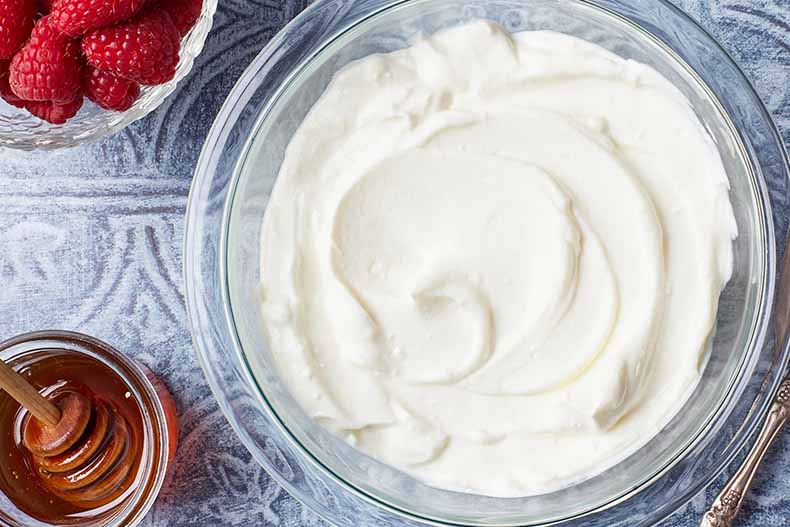
Flavored yogurt is one of the biggest calorie traps in the dairy aisle. A single 150g serving of popular fruit-flavored yogurt brands contains between 20-26g of added sugar – roughly equivalent to five teaspoons (USDA FoodData Central, 2023). That is more sugar than a glazed donut. This hidden sugar load spikes your insulin, drives fat storage, and leaves you craving more carbs within an hour of eating.
The protein content, which is the main reason people choose yogurt, is typically 5-7g in flavored varieties. Plain Greek yogurt delivers 15-20g of protein per serving with 0g of added sugar. That protein difference is massive for appetite control and metabolic rate.
The swap: Plain Greek yogurt with fresh berries. You cut the sugar from 20g+ down to the natural sugars in fruit (around 5-7g), triple the protein, and still get a genuinely satisfying breakfast.
2. Granola: The Calorie-Dense Topping You Are Likely Doubling
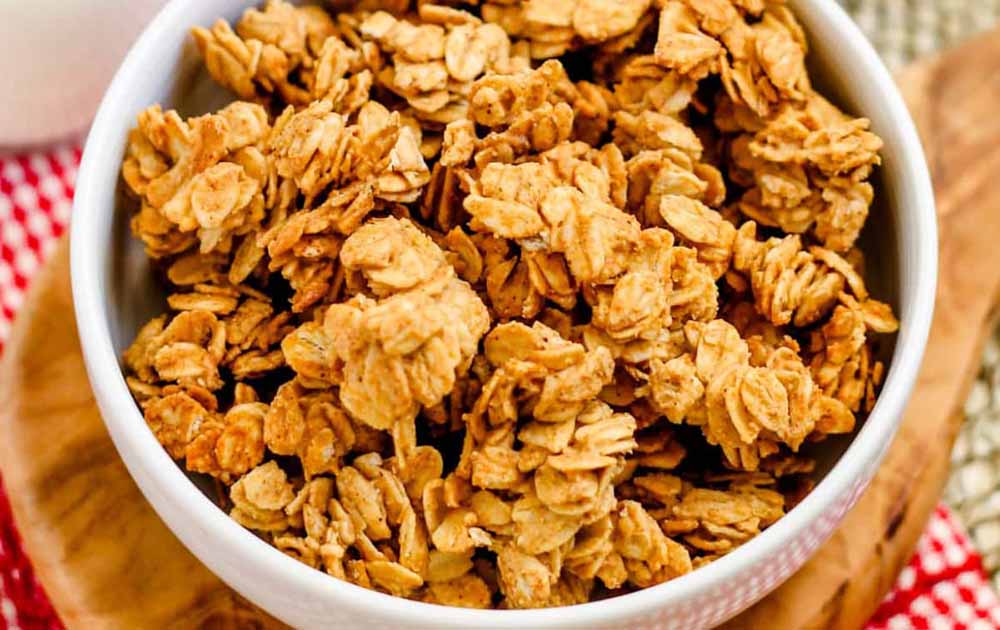
Granola has a strong health image – oats, nuts, seeds, whole grains. The problem is not the ingredients. It is the calorie density and the serving size gap between what the label says and what people actually pour. The standard granola serving size is 45g (roughly a quarter cup). At that amount, you are looking at 200-220 calories. Most people pour 90-120g without realizing it, which puts the bowl at 400-500 calories before adding milk or yogurt (USDA FoodData Central, 2023).
Granola also carries 12-18g of added sugar per labeled serving in most commercial brands. That number doubles when you eat the actual portion most people pour. The combination of high calorie density and easy overconsumption makes granola one of the most deceptive foods that stop weight loss.
The swap: Rolled oats with cinnamon and a small handful of nuts. You get the same texture and satiety at roughly half the calories. If you want granola, weigh it with a food scale until you can eyeball the correct serving accurately.
3. Fruit Juice: Liquid Sugar Without the Fiber That Makes Fruit Worth Eating
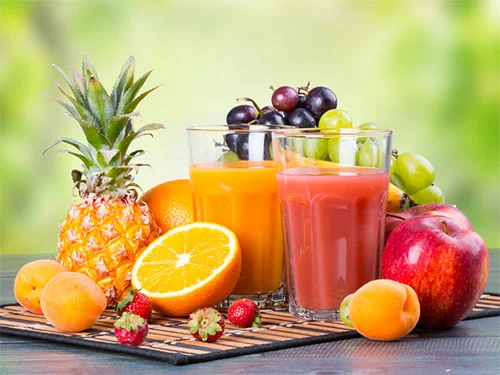
A 250ml glass of orange juice contains around 110 calories and 21g of sugar (USDA FoodData Central, 2023). An actual orange contains 62 calories, 12g of sugar, and 3g of fiber. The fiber is what slows sugar absorption, reduces the insulin spike, and keeps you full. When you juice fruit, you remove the fiber and concentrate the sugar, leaving something nutritionally closer to a soft drink than to whole fruit.
A Harvard School of Public Health study found that replacing one serving of fruit juice per day with whole fruit was associated with a 7% reduction in type 2 diabetes risk (Muraki et al., BMJ, 2013). Beyond blood sugar, juice does not register as food in the same way solid food does. Liquid calories do not trigger the same fullness signals, so they add to your daily intake rather than replacing anything (Mattes, American Journal of Clinical Nutrition, 2006).
The swap: Eat the whole fruit. If you want a drink, water with a few slices of citrus gives you the flavor with almost no calories.
4. Sports Drinks: Calories Designed for Athletes, Consumed by Everyone Else

Sports drinks like Gatorade and Powerade were developed for endurance athletes losing significant electrolytes during prolonged exercise – think 90+ minutes of intense activity. A 500ml bottle contains around 140 calories and 34g of sugar (manufacturer nutrition data, 2023). For the average person doing a 30-minute gym session or a lunchtime walk, those calories are entirely unnecessary and will directly offset any calorie burn from the workout.
The electrolytes in sports drinks can be useful for marathon runners or people exercising in extreme heat, but most people do not need them. The sugar content alone makes these drinks one of the most overlooked foods that stop weight loss, especially for people who drink them throughout the day rather than just during intense exercise.
The swap: Water with a pinch of salt and a squeeze of lemon for electrolyte balance without the sugar. If you truly need electrolytes after intense exercise, look for zero-sugar electrolyte powders.
5. Smoothies: Healthy Ingredients That Add Up to a Full Meal’s Worth of Calories
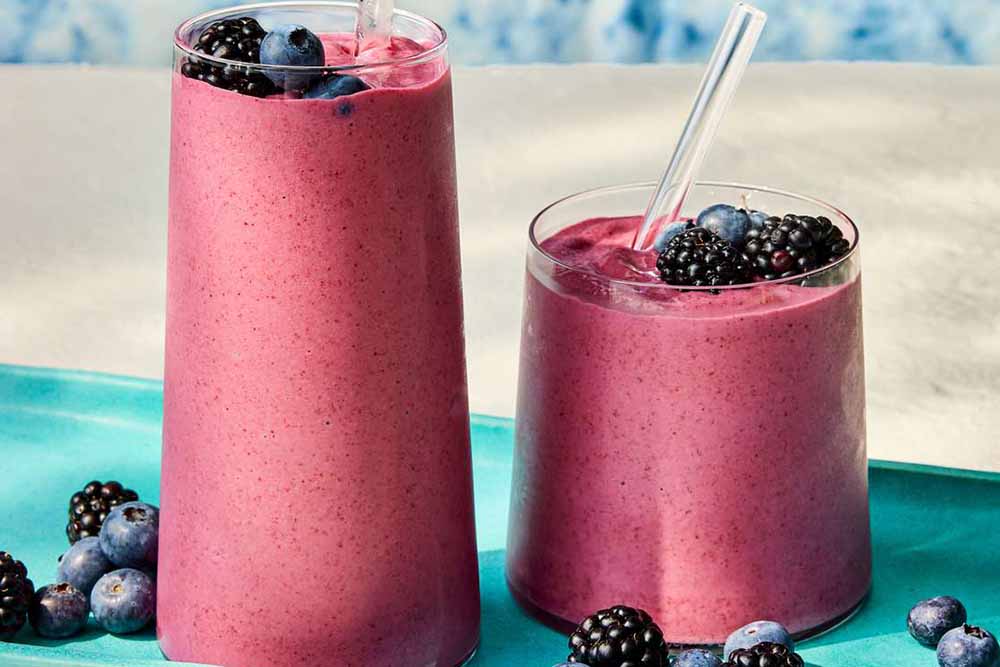
A smoothie made with banana, mango, oat milk, peanut butter, and protein powder can easily reach 600-800 calories, which is a complete meal, not a snack or supplement (calculated via USDA FoodData Central, 2023). The problem is that most people drink smoothies in addition to meals rather than instead of them. The ingredients are not the issue individually, but blending concentrates calorie density and removes chewing, which is part of how the body registers satiety.
Research from Penn State University found that people who ate food in solid form reported greater fullness than those who consumed the same calories in liquid form (Flood-Obbagy & Rolls, Appetite, 2009). Smoothies sold in cafes and chains are worse, as a large Tropical Smoothie Cafe smoothie can run 600-900 calories with 80-100g of sugar depending on the order.
The swap: If you make smoothies at home, cap ingredients at one cup of fruit, one cup of liquid, and one protein source. Skip the nut butter unless you are replacing a full meal, and aim for 300-400 calories maximum if it is a snack.
6. Low-Fat Salad Dressing: The Fat-Free Label That Hides a Sugar Problem
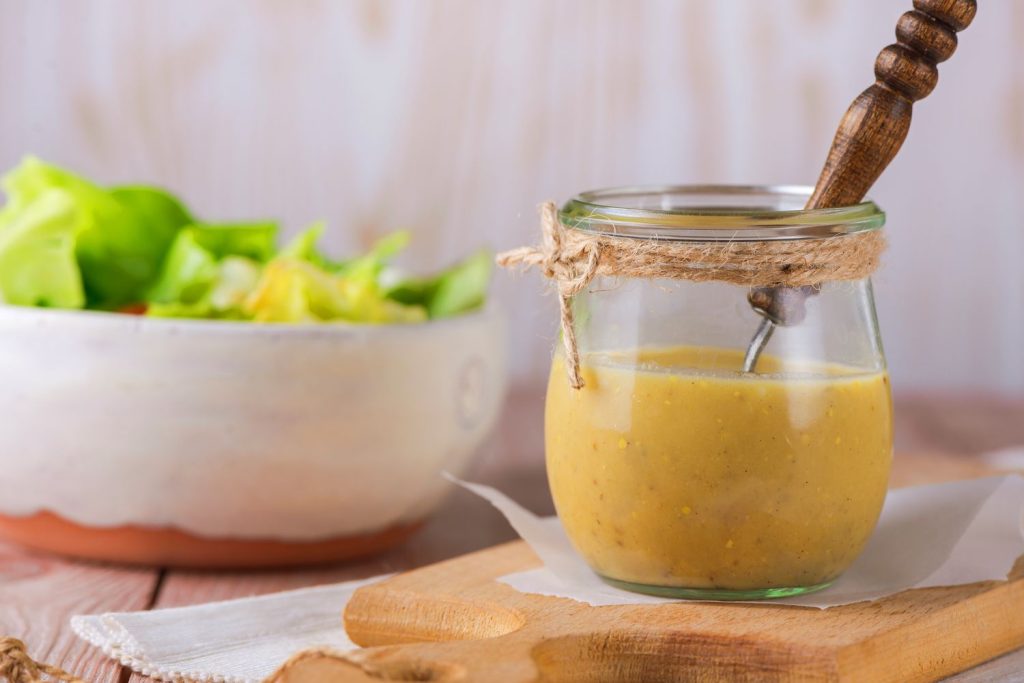
In the 1990s, dietary fat was blamed for weight gain, and food manufacturers responded by creating low-fat versions of everything. The problem is that fat carries flavor, so when manufacturers remove it, they replace it with sugar, starch, and thickeners to compensate. A two-tablespoon serving of low-fat Italian dressing contains around 45 calories but 5-7g of added sugar, while full-fat Italian dressing at the same serving size has 80-100 calories but only 1-2g of sugar (USDA FoodData Central, 2023).
The low-fat version has fewer calories but a significantly worse sugar profile. More importantly, fat helps absorb fat-soluble vitamins (A, D, E, K) found in the vegetables you are dressing. A study from Iowa State University found that fat-free dressing significantly reduced absorption of carotenoids from salad vegetables compared to full-fat dressing (Brown et al., American Journal of Clinical Nutrition, 2004).
The swap: Two tablespoons of olive oil and vinegar. Around 120 calories, zero added sugar, and better nutrient absorption from your salad.
7. Flavored Nuts: A Healthy Snack Turned Calorie Trap by Coating and Seasoning
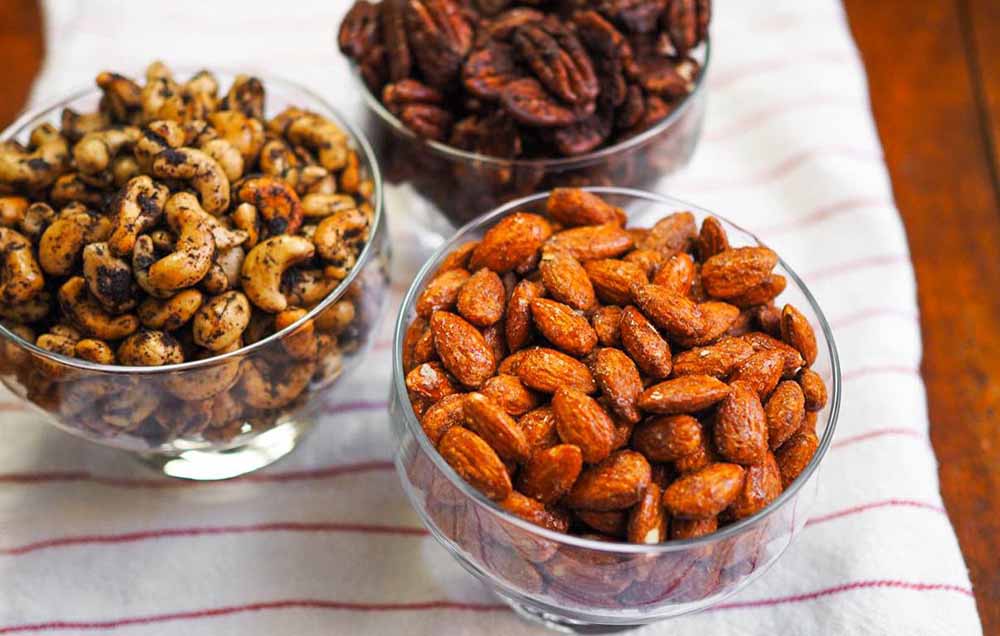
Plain nuts are genuinely good for you, as they are calorie-dense but research consistently links nut consumption to lower body weight over time (Flores-Mateo et al., American Journal of Clinical Nutrition, 2013). The problem starts when you add honey roasting, chocolate coating, BBQ seasoning, or cinnamon sugar. A 30g serving of honey-roasted peanuts adds 5-8g of sugar and 20-30 extra calories compared to plain peanuts.
When you factor in that most people eat 60-90g of nuts in a sitting (the bag-by-the-desk effect), those added sugars and calories add up fast. Flavored nut mixes also tend to contain lower-quality fillers including cheaper nuts, dried fruit high in added sugar, and chocolate chips, which push the calorie count even higher while reducing the satiety per calorie.
The swap: Plain nuts, portioned into 30g servings. If you want flavor, a pinch of salt or a dash of smoked paprika adds taste without sugar.
8. Whole Wheat Bread: Better Than White Bread, But Not a Free Pass
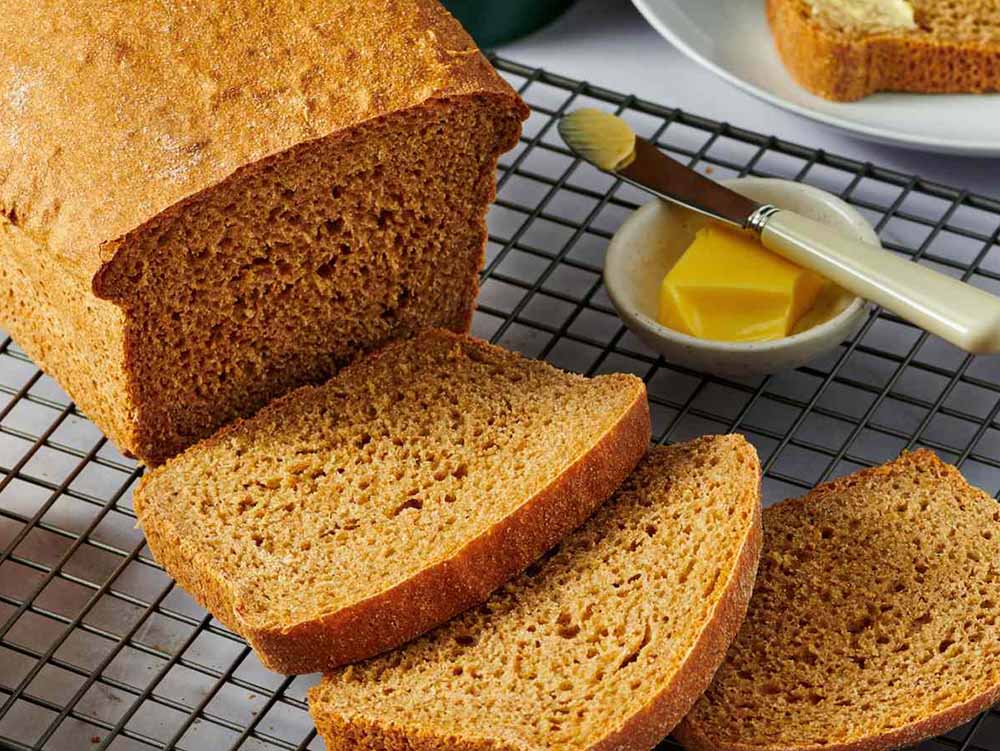
Whole wheat bread is genuinely better than white bread because it has more fiber, a lower glycemic index, and more micronutrients. However, “better than” does not mean “unlimited.” Two slices of whole wheat bread average 160-200 calories and 3-5g of sugar (USDA FoodData Central, 2023). If you eat four slices across the day (a very common amount with toast at breakfast and a sandwich at lunch), that is 320-400 calories from bread alone, before any fillings.
The bigger issue is that many “whole wheat” products are not what they appear. Ingredients lists that start with “enriched wheat flour” or list whole wheat flour as the second or third ingredient are mostly refined grain with a small amount of whole grain added for marketing purposes. The FDA requires only 51% whole grain content for a product to be labeled “whole grain” (FDA, 2023).
Check the ingredients list. “Whole wheat flour” should be the first ingredient. Alternatively, swap two slices for one slice of higher-fiber bread, or replace the bread in one meal with a lettuce wrap or grain bowl.
9. Protein Bars: Candy Bars With a Better Marketing Budget
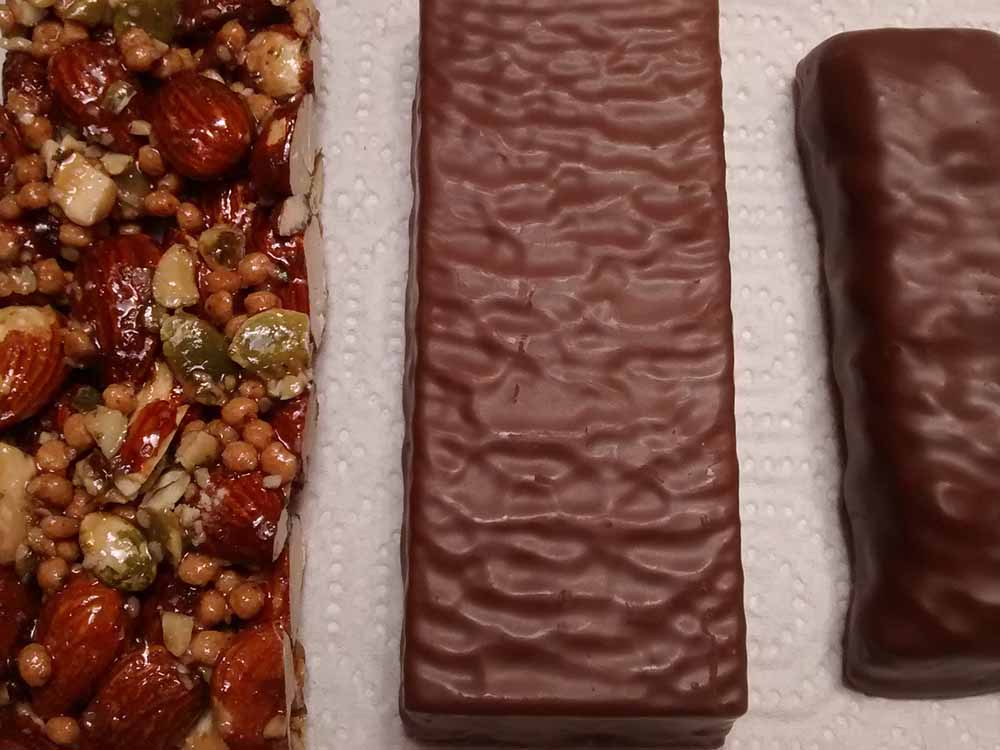
Most protein bars sold in mainstream supermarkets are nutritionally very close to candy bars. A popular 60g protein bar might contain 20g of protein, but also 25-30g of sugar, 8-10g of saturated fat, and 250-280 calories (manufacturer nutrition data, 2023). Compare that to a Snickers bar: 215 calories, 4g of protein, 20g of sugar. The protein bar has more protein, but roughly the same sugar content and more calories.
The bars that do have a clean nutrition profile—high protein, low sugar, minimal ingredients—are much more expensive and taste noticeably less like dessert. The ones that taste great are almost always the ones with a sugar content worth scrutinizing.
The swap: Hard-boiled eggs, Greek yogurt, cottage cheese, or edamame for post-workout protein. If you need a portable bar, look for options with under 5g of sugar and a short ingredients list. RXBARs and Quest bars are two commonly available options with better sugar profiles.
10. Coffee Shop Drinks: The 500-Calorie Habit That Does Not Feel Like Eating

A plain black coffee has 5 calories. A large flavored latte from a major chain can have 400-600 calories, 50-70g of sugar, and 15-20g of fat—before you add a muffin (Starbucks nutrition data, 2023). The issue is not coffee. The issue is that these drinks are not experienced as food. People buy them on the way to work, drink them at their desks, and do not register those calories against their daily intake. A 500-calorie coffee drink consumed daily adds 3,500 calories per week—exactly one pound of fat in stored energy.
Seasonal drinks (pumpkin spice, peppermint mocha, caramel holiday specials) are significantly worse, regularly hitting 500-600 calories in a grande or medium size.
The swap: Black coffee, Americano, or a flat white (around 100 calories). If you want something sweet, ask for sugar-free syrup and oat or almond milk. You can cut a 500-calorie drink down to 100-150 calories with two straightforward substitutions.
How Many Calories These 10 Foods Could Be Costing You
| Food | Typical Daily Intake | Estimated Calories | Smarter Swap | Swap Calories |
|---|---|---|---|---|
| Flavored yogurt | 1 serving (150g) | 150-180 | Plain Greek yogurt + berries | 110 |
| Granola | Double serving (90g) | 400-440 | Rolled oats + nuts | 200 |
| Fruit juice | 1 glass (250ml) | 110 | Whole orange | 62 |
| Sports drink | 1 bottle (500ml) | 140 | Water | 0 |
| Large smoothie | 1 cafe smoothie | 600-800 | Home smoothie (controlled) | 300 |
| Low-fat dressing | 2 tbsp | 45 | Olive oil + vinegar | 120* |
| Flavored nuts | 60g serving | 380 | Plain nuts (30g) | 170 |
| 4 slices whole wheat bread | Daily bread total | 350-400 | 2 slices high-fiber bread | 180 |
| Mainstream protein bar | 1 bar | 250-280 | 2 hard-boiled eggs | 140 |
| Large flavored latte | 1 daily coffee | 400-500 | Flat white | 100 |
*Olive oil has more calories than low-fat dressing but delivers better satiety and no added sugar.
Frequently Asked Questions About Foods That Stop Weight Loss
What foods stop weight loss even when you are eating healthy?
The foods most likely to stall weight loss while appearing healthy include flavored yogurt, granola, fruit juice, smoothies, and protein bars. These are high in added sugar, calorie-dense, or easy to over-consume because their packaging implies they are diet-friendly. Tracking actual portions for one week often reveals where hidden calories are coming from.
How do I know if a food has too much added sugar?
Check the nutrition label for “Added Sugars”—this is a separate line from total sugars on US nutrition labels since 2020 (FDA, 2020). Anything above 10g of added sugar per serving deserves a second look if you are managing your weight. The American Heart Association recommends a maximum of 25g of added sugar per day for women and 36g for men (AHA, 2023).
Calorie-for-calorie, yes. But liquid calories are less satiating than solid food calories. Research consistently shows that people do not compensate for liquid calories by eating less at the next meal the way they do with solid food (Mattes, American Journal of Clinical Nutrition, 2006). This means liquid calories tend to be additive rather than substitutive.
Is low-fat food better for weight loss?
Not automatically. Low-fat products often contain more added sugar to compensate for lost flavor, which can make them worse for blood sugar management and overall calorie control. Full-fat foods tend to be more satiating, which means you eat less of them. The evidence for low-fat diets outperforming other dietary patterns for long-term weight loss is weak (Tobias et al., Lancet Diabetes & Endocrinology, 2015).
How much does switching these foods actually matter?
Based on the comparison table above, replacing all 10 foods with smarter alternatives could reduce daily intake by 1,000-1,500 calories without changing your meal structure or going hungry. At that reduction, you would create a meaningful weekly deficit without any formal dieting. Results depend on current habits – someone already eating mostly whole foods will see a smaller impact than someone who regularly consumes several items on this list.
What is the fastest way to find hidden calories in my diet?
Log everything you eat for three days using a calorie tracking app (MyFitnessPal, Cronometer, or Lose It are the most commonly used). Most people are surprised by two categories: drinks and condiments. These are the items people consistently forget to log and consistently underestimate in portion size.
Key Takeaways
- The foods most likely to stop weight loss are the ones that look healthy – not the obvious junk food
- Liquid calories (juice, smoothies, sports drinks, coffee drinks) are the most under-counted calories in most diets
- “Low-fat” labels do not mean lower calorie or better for weight management – check added sugar content
- Serving size gaps between what labels say and what people actually eat account for a large portion of untracked calories
- Small, consistent swaps across multiple food categories add up to significant weekly calorie reductions without strict dieting
Recommended Article
12 Best Foods for Weight Loss That Actually Keep You Full
12 No-Cook Snacks That Actually Work for Weight Loss (Zero Recipes Required)
11 Best Weight Loss Breakfast Ideas That Keep You Full for Hours