You can actually control your cortisol levels through what you eat. Not with expensive supplements or extreme dieting, but by making simple, strategic food choices that stabilize your blood sugar and support your adrenal glands. I learned this the hard way—for years, I’d wake up wired, crash by 3 PM, then struggle to sleep despite being exhausted. I thought it was just my schedule, but it turns out my eating pattern was spiking my cortisol at exactly the wrong times. Once I shifted how I timed my meals and what I ate, everything changed: my energy stabilized, my mood improved, and I actually slept.
If you feel constantly stressed, battle afternoon slumps, or lie awake at night despite exhaustion, this isn’t about willpower. Your body is likely caught in a cortisol cycle that food can actually interrupt. This guide walks you through exactly what works, what doesn’t, and why timing matters as much as the food itself. Here’s what you’ll walk away with: a practical, no-nonsense eating strategy that lowers stress hormones without eliminating the foods you enjoy.
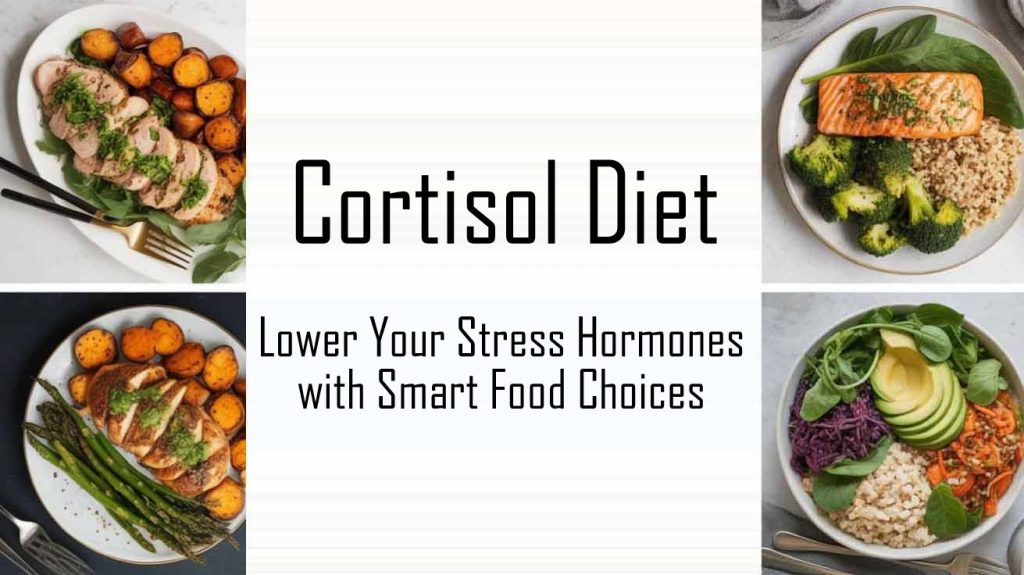
What the Cortisol Diet Actually Is
Let’s keep it simple—the cortisol diet is not hard, not a fad, and not about fancy pills. Here is the truth: you eat in a way that keeps your stress hormone low. Stable blood sugar equals stable cortisol. When your blood sugar drops, your body makes cortisol, and you feel stressed for no real reason. Good nutrients like magnesium, vitamin C, B vitamins, and omega-3s help your body handle stress. When you eat matters too—eat at the right times to work with your body’s natural rhythm, not against it. Do you think you need special pills? You don’t. Real food, eaten the right way, is all you need.
Why Most People Get Stuck in the Cortisol Cycle
Your cortisol goes up when you wake up. That is normal and gives you energy. But here is the mistake most people make: they drink coffee on an empty stomach. Your body thinks no food is a danger sign, so cortisol goes up more, and you feel shaky or on edge. By lunch, you crash, so your body makes more cortisol. At night, cortisol should drop, but it stays high, and you can’t sleep. The fix is easy—just change one thing at a time.
The 9 Essential Eating Strategies
Let’s look at each step. They are simple to do.
1. Start Every Day With Protein—Before Coffee
Why this works: Protein keeps your blood sugar steady and also helps your brain make dopamine. That means a better mood and less stress. What to do: Eat at least 20 grams of protein before coffee. Good picks include 2–3 eggs, Greek yogurt with collagen powder, a protein smoothie, or smoked salmon. Skip sugary breakfasts like sweet oatmeal or pastries—they make you crash. I was not sure about this at first because eating before coffee felt odd, but after three days, I saw a big change. No more 10 AM crash, and my mood was much better.
2. Eat Every 3–4 Hours
Why this works: Low blood sugar feels like a threat to your body, so cortisol goes up to get stored energy. Eating on time stops that. What to do: Eat breakfast within one hour of waking, have lunch in the early afternoon, eat a snack around 3 PM, and eat dinner by 6–7 PM. Each meal or snack should have protein, healthy fat, and complex carbs. You don’t need to eat more—just eat on a steady schedule. Your stress drops when your body knows food is coming.
3. Start Dinner With a Leafy Green Salad
Why this works: Leafy greens have lots of magnesium, which tells your body to calm down like calming pills do. What to do: Eat a salad with dark leafy greens (spinach, kale, arugula) before your main meal, drizzle with olive oil and lemon, and add seeds like pumpkin or sunflower for more magnesium. Keep it simple. The mix of magnesium and healthy fat helps your body use key vitamins. You are not just eating salad—you are telling your nerves to relax.
4. Eat Fatty Fish 2–3 Times Per Week
Why this works: Omega-3 fats lower inflammation and lower cortisol deep inside your cells to calm stress. What to do: Pick salmon, sardines, mackerel, or anchovies—eat 3–4 ounces per meal. If you don’t eat fish, take a good DHA pill. Stay away from big fish like shark or king mackerel because they have mercury. This was easy for me; a can of sardines on toast takes two minutes and costs less than a coffee.
5. Eat Vitamin C Around 3 PM
Why this works: Your adrenal glands use vitamin C to make cortisol, but by mid-afternoon, your vitamin C drops. A snack helps. What to do: Around 3 PM, eat a snack with vitamin C—good picks include bell peppers (raw), kiwis, berries, or orange slices. Add a handful of nuts for staying power. This is the easiest tip—a bell pepper and some almonds take 30 seconds and really help with that 3 PM crash.
6. Switch to Matcha After 2 PM
Why this works: Coffee after 2 PM keeps cortisol high at night and ruins sleep. Matcha has L-theanine, which gives you calm energy with no jitters. What to do: Keep your morning coffee since cortisol is high then, so it’s fine. After 2 PM, switch to matcha tea or green tea. If you must have coffee, have one small cup before 3 PM. I was surprised by the change—coffee feels like a jolt, while matcha feels like a slow, steady lift.
7. Eat Starchy Carbs at Dinner
Why this works: Complex carbs at dinner fill your muscle stores for the night, which stops your body from using cortisol to make sugar in the morning. You wake up calmer. What to do: Have one serving of complex carbs at dinner such as sweet potato, brown rice, quinoa, or oats, paired with protein and healthy fat. Don’t fear carbs—you need them. This goes against diet rules, but it works because your body needs carbs at night to lower cortisol the next day.
8. Eliminate Artificial Sweeteners
Why this works: Fake sweeteners trick your body into making insulin go up with no real sugar, which upsets your gut and raises cortisol. What to do: Swap diet soda for plain sparkling water. If you need sweet, use stevia or monk fruit. Check labels because fake sweeteners hide in “healthy” foods. Your gut and brain are linked, and fake sweeteners harm your gut bugs, which makes your stress go up.
9. Eat a Small Handful of Nuts Before Bed
Why this works: Nuts have magnesium, zinc, and B6, which calm your nerves and help you relax. A small snack keeps blood sugar steady all night. What to do: Eat a small handful of almonds, walnuts, or cashews 30–60 minutes before bed. Add one square of dark chocolate (70% cacao or more) for extra magnesium. Keep it small—this is just to help you sleep. This feels like a treat, so you will stick with it.
The Timing Framework That Actually Works
Your cortisol has a natural rhythm, so you need to work with it. In the morning from 6–9 AM, cortisol is high to help you wake up. Eat protein within one hour of waking and wait 30 minutes before coffee to avoid a big spike. At midday from 12–1 PM, eat a balanced lunch with protein, healthy fat, and carbs to keep your energy steady. In the afternoon around 3 PM, eat a vitamin C snack with healthy fat to stop the energy crash and help your adrenals.
In the evening from 6–7 PM, eat a salad first, then your main meal. Add complex carbs to fill your stores, and stop eating 2–3 hours before bed. Before bed, have a light snack with nuts and maybe dark chocolate, but no caffeine after 2 PM. You don’t have to be perfect, but being steady helps a lot.
The Foods to Actually Avoid
You don’t have to cut out everything, but these foods make cortisol go up more. Sugary cereal and breakfast foods spike your blood sugar, then crash it in 90 minutes. Refined carbs with no protein or fat like toast alone, crackers alone, or pasta alone cause blood sugar swings. Regular alcohol raises cortisol and ruins sleep. Skim milk lacks fat so your body can’t use key vitamins for adrenal health. Energy drinks and too much caffeine push cortisol too high. You don’t need to be perfect—just swap the worst picks for better ones.
How Long Does This Take?
Most people feel a change in 3–5 days. Your energy gets steady, your mood gets better, and the afternoon crash gets smaller. Real changes—good sleep, steady energy, less worry—show up in 2–3 weeks, but you will feel something right away. This is not a 30-day diet; it is a way to eat that works with your body. Once you feel good, you will want to keep going.
Quick Reference: The Daily Cortisol-Friendly Meal Pattern
- When you wake up: Eat protein + water (eggs, yogurt, or smoothie)
- 30 minutes later: Coffee
- Lunch: Protein + veggies + healthy fat + complex carbs
- 3 PM snack: Vitamin C + nuts
- Before dinner: Leafy green salad with olive oil
- Dinner: Protein + starchy carb + veggies
- Before bed: Small handful of nuts ± dark chocolate
The Bottom Line
Cortisol is not bad—you need it to handle stress. The problem is when it goes up and down all day because of how you eat. The one big change most people need is to eat breakfast with protein before coffee, then eat every 3–4 hours. That one step cuts the cortisol rollercoaster. Add the magnesium from salad, the omega-3s from fish, and the carbs at dinner, and your nerves will calm down. You don’t need pills or big changes—you need steady meal times and smart food picks.
Your body will respond fast. Start with one or two of these steps and add more as you go. In a few weeks, you will feel the change in your energy, mood, and sleep.
Frequently Asked Questions
Q: Can I still drink coffee?
A: Yes. Eat protein first, wait 30 minutes, then have your coffee. After 2 PM, switch to matcha or tea.
Q: What if I can’t eat fish?
A: Take a DHA pill. It gives you the same omega-3 help.
Q: Does this diet cost a lot?
A: No. Eggs, beans, frozen veggies, and canned fish are cheap. You just eat real food on a schedule.
Q: How strict do I need to be?
A: Not very. Being steady matters more than being perfect. Focus on meal timing and protein at breakfast; the rest will fall into place.
Q: Will this help with anxiety?
A: Yes, it lowers your base stress level, which helps most people feel less worried. It is not a fix for therapy or meds, but it helps a lot.
Final Word
Your stress is not just in your mind—it is in your blood sugar, your meal times, and the nutrients you give your body. Fix those, and your stress hormones will fix themselves. Start today by eating protein at breakfast and see how you feel by Friday. Then add one more step. That is how real change happens—through small, steady shifts that add up to a whole new way your body feels. You can do this.
Recommended Article
How to Get a Natural Glow While Dieting: What Actually Works