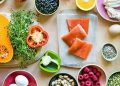



A protein diet plan for women is about consistently eating enough protein at every meal to support muscle maintenance, metabolic health, hormone balance, and sustained energy throughout the day. This is not about crash dieting or restrictive eating; it is about building a sustainable habit that fuels your body properly. This step-by-step guide will walk you through calculating your personal protein needs, choosing the right sources, and structuring a daily plan that works for your lifestyle, whether you are sedentary or highly active.
A protein diet plan for women means eating enough protein at each meal to support muscle, metabolism, hormones, and energy — not just hitting a daily number. Most women need 0.7–1.0 grams of protein per pound of body weight per day, depending on activity level, according to the International Society of Sports Nutrition (2017). The plan works in five steps: calculate your target, choose your protein sources, build your meals, time your intake, and track your progress. Both animal and plant proteins work, as the key is hitting your daily target consistently, and you do not need supplements to follow this plan since whole foods are enough for most women.

What You Need Before You Start
Before diving into the plan, gather a few essentials to set yourself up for success. You will need your current body weight in pounds or kilograms, a rough sense of your activity level (sedentary, moderately active, or very active), and access to a basic food tracking app like Cronometer or MyFitnessPal. Additionally, plan for a weekly grocery budget and set aside 20–30 minutes for meal prep planning to make the process seamless.
Step 1: Calculate Your Daily Protein Target
Your protein target depends on your body weight and how active you are. The baseline recommendation from the International Society of Sports Nutrition (2017) is 0.7–1.0 grams of protein per pound of body weight per day for active women. For sedentary women, 0.54–0.68 grams per pound is a practical starting point, as outlined by the Dietary Reference Intakes from the National Academies (2005). To find your starting range, refer to the table below based on your body weight and activity level.
| Body Weight | Sedentary (0.54–0.68 g/lb) | Moderately Active (0.7–0.8 g/lb) | Very Active (0.9–1.0 g/lb) |
|---|---|---|---|
| 120 lbs | 65–82 g | 84–96 g | 108–120 g |
| 140 lbs | 76–95 g | 98–112 g | 126–140 g |
| 160 lbs | 86–109 g | 112–128 g | 144–160 g |
| 180 lbs | 97–122 g | 126–144 g | 162–180 g |
Pick the middle of your range as your daily target to start, then adjust after 2–3 weeks based on your energy levels, hunger cues, and overall results. This personalized approach ensures you are not over- or under-eating protein relative to your needs.
Step 2: Choose Your Protein Sources
Consistency matters more than eating “perfect” sources, so pick proteins you actually enjoy eating. Here are the most practical options, sorted by protein content per 100g, to help you build a varied and satisfying diet. You do not need to choose one category — most women hit their targets faster when they mix both animal and plant-based sources.
Animal-based sources:
- Chicken breast: 31g protein per 100g
- Canned tuna: 25g protein per 100g
- Eggs: 13g protein per 100g (roughly 6g per large egg)
- Greek yogurt (plain, full-fat): 10g protein per 100g
- Cottage cheese: 11g protein per 100g
- Salmon: 20g protein per 100g
Plant-based sources:
- Tempeh: 19g protein per 100g
- Lentils (cooked): 9g protein per 100g
- Edamame: 11g protein per 100g
- Tofu (firm): 8g protein per 100g
- Black beans (cooked): 8.9g protein per 100g
- Hemp seeds: 31g protein per 100g
Step 3: Build Your Meals Around Protein First
Start every meal by deciding the protein source first, then add vegetables, carbohydrates, and fats around it. This single habit makes hitting your daily target much easier and ensures you prioritize the most critical macronutrient. A practical formula per meal is 25–40g of protein plus 1–2 cups of vegetables and one serving of complex carbs or healthy fat. Below is a sample one-day meal structure for a woman targeting 120g of protein.
| Meal | Food | Protein |
|---|---|---|
| Breakfast | 3 eggs scrambled + 1 cup Greek yogurt | 31g |
| Lunch | 150g canned tuna + mixed greens + olive oil | 37g |
| Snack | 1 cup cottage cheese + handful of almonds | 14g |
| Dinner | 150g grilled chicken breast + roasted vegetables + brown rice | 40g |
| Total | 122g |
Adjust portion sizes up or down based on your personal target from Step 1 to ensure you stay within your range while enjoying a balanced diet.
Step 4: Spread Your Protein Across the Day
Eating all your protein in one meal does not work as well as spreading it out. Research published in the Journal of Nutrition (2014) found that muscle protein synthesis was 25% higher when protein intake was distributed evenly across three meals rather than concentrated in one. A practical distribution for a 120g target would be 30g at breakfast, 35g at lunch, 15g as an afternoon snack, and 40g at dinner, ensuring your body receives a steady supply throughout the day for optimal benefits.
If you train, eat 20–30g of protein within 2 hours after your workout. Timing matters most in that post-exercise window (Morton et al., British Journal of Sports Medicine, 2018).
Step 5: Track, Adjust, and Make It a Habit
Track your protein intake for the first 2–3 weeks. You do not need to track forever — the goal is to build a mental map of what hitting your target actually looks like day to day. Here is what to watch in the first month:
- Energy levels: Low energy after week one often means protein is too low or calories overall are too low.
- Hunger between meals: If you’re hungry within 2 hours of eating, increase protein at that meal by 5–10g.
- Digestion: A sudden jump in protein can cause bloating. Increase your target gradually — by 10–15g per week — rather than jumping straight to your full target on day one.
- Weight or body composition: Changes typically show at the 3–4 week mark, not the first week.
After 4 weeks, re-assess and adjust your target if your weight, activity level, or goals have changed.
Common Problems and How to Fix Them
If you encounter difficulties adjusting to a higher protein intake, common problems have straightforward solutions. The table below outlines frequent issues, their likely causes, and what to do about them.
| Problem | Likely Cause | Solution |
|---|---|---|
| Can’t hit your daily protein target | Meals are carb-heavy with no protein anchor | Add a protein source to every meal before building the rest of the plate |
| Feeling bloated after increasing protein | Too fast an increase, especially from legumes | Increase by 10–15g per week; drink more water; cook legumes thoroughly |
| Getting bored of the same foods | Too narrow a list of protein sources | Rotate proteins weekly — use the source list in Step 2 as a checklist |
| Spending too much money on protein foods | Relying on premium cuts or branded products | Eggs, canned fish, lentils, and cottage cheese are the cheapest per gram |
| Losing muscle even while eating protein | Calories overall too low | Protein alone does not prevent muscle loss if total calorie intake is too low — check overall intake |
Frequently Asked Questions About Protein Diet Plans for Women
How much protein does a woman need per day?
Most women need between 0.54 and 1.0 grams of protein per pound of body weight per day. Sedentary women sit at the lower end of that range. Women who train regularly, are over 50, or are trying to lose weight while preserving muscle should aim for the higher end (International Society of Sports Nutrition, 2017).
What are the best protein foods for women?
The best protein foods are the ones you eat consistently. Practically speaking, eggs, Greek yogurt, chicken breast, canned tuna, cottage cheese, lentils, and tempeh all offer high protein per dollar and are easy to prepare. None of them require cooking skill beyond the basics.
Can women get enough protein on a plant-based diet?
Yes. Hitting a 100–130g daily protein target on a plant-based diet takes more planning than an omnivore diet, but it is fully achievable. The key is combining multiple plant protein sources — hemp seeds, lentils, tofu, edamame, and tempeh — throughout the day rather than relying on one.
Should women eat protein before or after a workout?
Post-workout protein has stronger evidence behind it. Eating 20–30g of protein within 2 hours after training is enough to support muscle repair and growth for most women (Morton et al., British Journal of Sports Medicine, 2018). Pre-workout protein also helps if you train fasted, but it is secondary to post-workout intake.
Will eating more protein cause women to bulk up?
No. Increasing protein intake does not cause significant muscle bulk in women without a dedicated strength training program and a calorie surplus. For most women, higher protein intake supports leaner body composition — more muscle tone, less body fat — not size gain.
Is a high-protein diet safe for women long-term?
For healthy women with normal kidney function, protein intakes up to 2.2g per kilogram of body weight per day are considered safe (Helms et al., International Journal of Sport Nutrition and Exercise Metabolism, 2014). Women with existing kidney conditions should consult a doctor before increasing protein significantly.
How long does it take to see results on a protein diet plan?
Most women notice better energy and reduced hunger within 1–2 weeks of consistently hitting their protein target. Visible body composition changes — more muscle tone, reduced fat — typically take 4–8 weeks when protein intake is paired with regular exercise.
Summary
Once you understand your target and your options, applying that knowledge day after day is what produces results. The following step-by-step plan turns the numbers and food lists into an actionable routine you can follow without overcomplicating your meals.
- Step 1: Calculate your daily target — 0.54–1.0g per pound of body weight, depending on activity level.
- Step 2: Choose protein sources from the animal and plant lists that fit your diet and budget.
- Step 3: Build every meal protein-first, aiming for 25–40g per meal.
- Step 4: Spread protein across 3–4 meals per day; prioritize post-workout intake if you train.
- Step 5: Track for 2–3 weeks, then adjust based on energy, hunger, and results.
Recommended Article
7 Day Oatmeal Diet Plan: Lose Weight Step by Step in 2025
8 High Cholesterol Diet Tips That Actually Taste Good
Soft Food Diet: What Actually Works (And What Nobody Tells You)