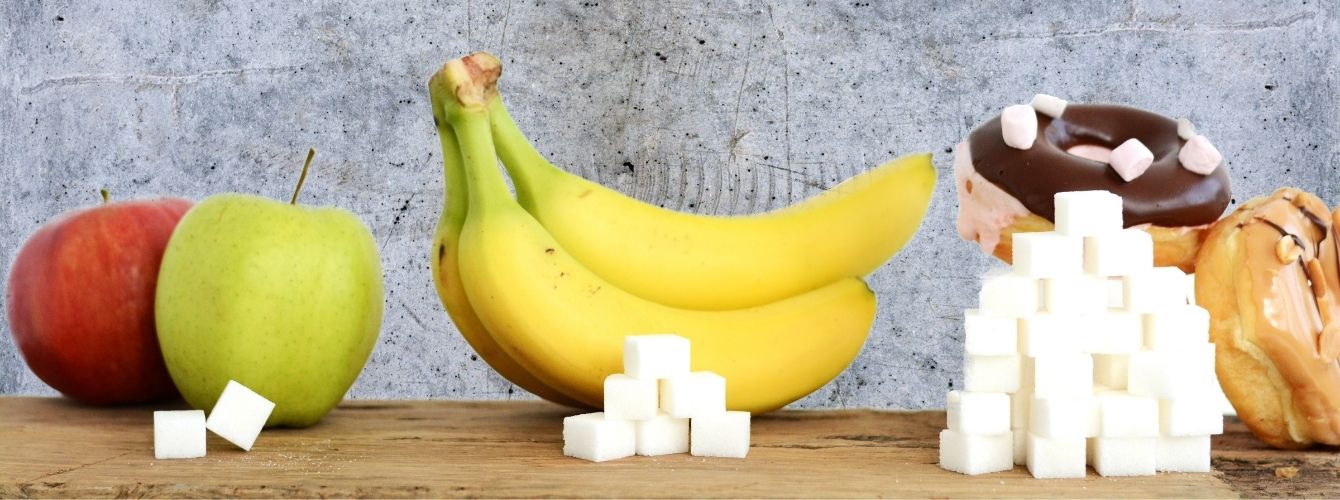
Understanding the distinction between added sugar and natural sugar is fundamental to managing your health and controlling cravings. This difference changes everything about how your body processes these substances and responds to them. Miss it, and you’ll find yourself stuck in a cycle of cravings and energy crashes that seem impossible to break.
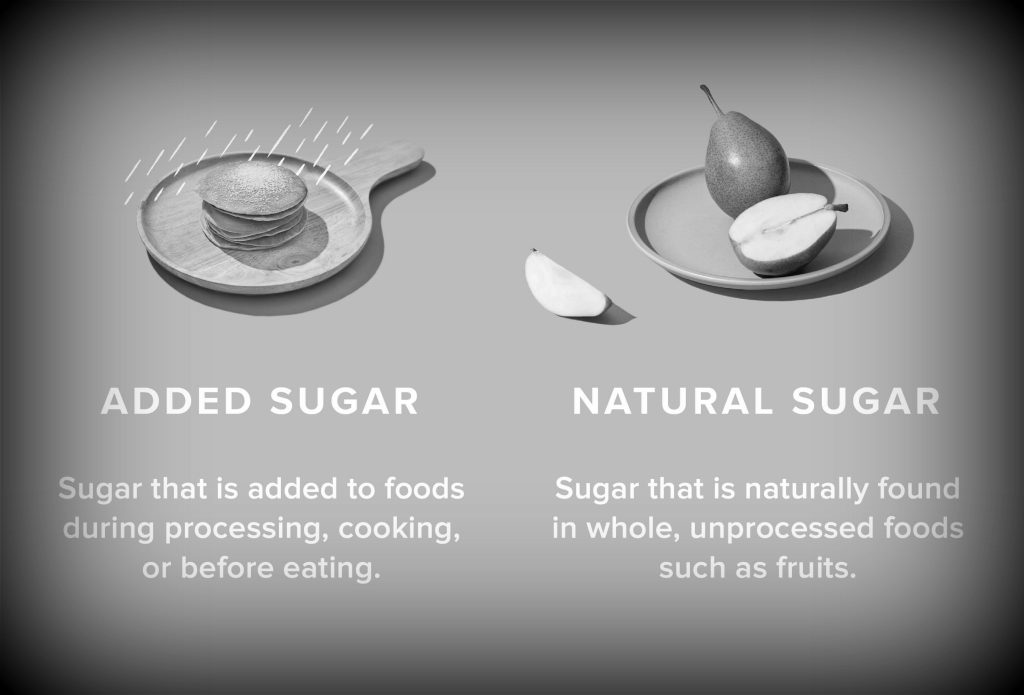
Added Sugar vs. Natural Sugar: What Your Body Really Gets
Added sugar is refined sugar or syrup that companies add when making food. It comes alone—no fiber, water, or nutrients attached. When you eat it, blood sugar spikes fast, triggering your pancreas to release too much insulin. One hour later, blood sugar crashes, leaving you tired and craving more sugar.
Natural sugar comes packaged in whole food where it belongs. An apple has 25 grams of carbs and also contains 4 grams of fiber. That fiber wraps around the sugar and slows how fast it enters your bloodstream. Blood sugar rises slowly, your pancreas releases the right amount of insulin, and you experience no crash or desperate cravings.
Here’s the real difference between these two types of sugar and how they impact your body:
| Factor | Added Sugar (Soda, Candy) | Natural Sugar (Apple, Berries) |
| Fiber content | None | 3-5g per serving |
| Speed it enters bloodstream | Minutes (blood sugar spikes) | 1-2 hours (slow rise) |
| Insulin response | Fast and too much | Right amount, controlled |
| What your body gets | Empty calories only | Vitamins, minerals, antioxidants |
| How long you stay full | 20-30 minutes, then hungry | 2-3 hours of real fullness |
A 12-ounce Coke has 39 grams of sugar with zero fiber, hitting your system fast and spiking blood sugar, which leaves you feeling more hungry afterward. A medium apple has 25 grams of carbs with 4 grams of fiber, taking 1-2 hours to digest and keeping you satisfied throughout that time. This is why fruit doesn’t hurt your health and why a no-sugar diet isn’t about giving up food—it’s about knowing which sugars really matter to your body.
Why Sugar Cravings Are a Biological Problem, Not a Character Flaw
Stop blaming yourself for your sugar cravings. Your cravings aren’t weakness or a sign of poor willpower. They’re a direct biological response to how your body reacts to sugar, and the good news is that you can fix this.
The Blood Sugar Rollercoaster Explained
This cycle keeps you stuck in a pattern that repeats over and over again throughout your day. Understanding each step helps you recognize why breaking free requires changing what you eat, not changing who you are.
- You eat added sugar. Glucose floods your blood fast.
- Your pancreas overreacts. It releases too much insulin.
- Your blood sugar drops. It drops way too far.
- Your body wants sugar. Low blood sugar causes strong cravings.
- The cycle repeats. Every few hours, you crash and crave again.
This isn’t laziness—this is how insulin works in your body. Your pancreas works too hard, and over time, your cells don’t hear insulin signals as well as they should. Over time, this pattern gets worse and you get closer to prediabetes, meaning your body can’t process sugar right anymore.
When you cut added sugar, you break this cycle fast. Your blood glucose stays even without spikes or crashes, and without crashes, there are no cravings. Your energy stays steady all day long, and your hunger becomes real physical hunger instead of panic-driven desperation.
How Sugar Hijacks Your Brain’s Reward System
Sugar releases dopamine, which is the pleasure chemical that makes you want it again and again. The problem is that doing sugar repeatedly numbs your brain to its effects, meaning you need more sugar to feel the same pleasure. You build tolerance, and this is how the same brain chemistry works with cocaine addiction in some people.
Yale researchers found something remarkable: sugar uses the same brain parts as heroin in some people. It’s not hype or exaggeration—it’s real brain science. The good news is that this reverses fast. Quit sugar for 2-3 weeks and your brain resets completely. Suddenly, fruit tastes great, dark chocolate feels special, and your brain’s reward system works right again.
Understanding the habit loop is equally important for breaking your sugar dependency. Your cravings follow a pattern: a trigger (stress, boredom, the 3pm slump, or sadness) leads to a behavior (reaching for sugar), which delivers a reward (quick joy and energy boost). To break this loop, identify your trigger first, then change what you do instead. Stressed? Take a walk instead of eating cookies. Bored? Drink water or eat nuts. The trigger stays the same, but your action changes, and soon the new action becomes automatic.
What Actually Happens When You Quit Added Sugar
You don’t have to wonder about the results of quitting added sugar. The changes are real, and they happen fast enough that you’ll notice them within days or weeks.
Weight Loss Without Counting Calories
Weight loss without trying is what people notice first when they quit added sugar. Here’s why: cutting added sugar naturally drops your calorie intake. You’re not counting calories or restricting yourself—you’re eating more whole foods and fewer empty calories. But there’s more happening at a biological level.
Sugar breaks how your body knows when to stop eating. When you eat sugar, glucose briefly stops the hunger signal, then insulin crashes your glucose levels, causing the hunger hormone to spike dramatically. Your body never receives the signal to stop eating. When you cut added sugar and eat protein, fat, and fiber instead, your hunger hormones rebalance completely. Ghrelin (the hunger hormone) stays lower, leptin (the fullness hormone) works better, you feel full on less food, and you naturally eat less without needing willpower. Most people lose 5-10 pounds in month one without using willpower at all, because their body is truly satisfied.
Stable Energy and Mental Clarity
The afternoon energy crash goes away completely when you quit sugar, which is a change that might shock you. Many people think they’ll feel bad without their sugar fix, but instead, they experience steady energy all day long with no afternoon slump.
When blood sugar stays even, your brain gets steady fuel. No crashes. No fog. People report sharp focus, better mood, and clearer thinking. These changes happen in days.
Better Blood Sugar Control (Critical for Prediabetes)
If you’re prediabetic, this diet becomes medical help. It helps your body handle insulin in 2-3 weeks. Your pancreas isn’t fighting blood sugar spikes.
Research shows people who cut added sugar for 8 weeks see:
- 33% better insulin response
- 23% lower fasting blood sugar
- Big improvement in HbA1c (long-term blood sugar)
For prediabetics, this can stop type 2 diabetes.
What You Can Actually Eat (It’s Way More Than You Think)
This is when a no sugar diet stops feeling like loss. It starts feeling like lots of food. You have many yummy options.
Proteins That Keep You Full
These proteins trigger fullness. They keep blood sugar even. They raise how fast your body burns energy:
- Chicken, turkey, beef, pork
- Fish (especially salmon)
- Eggs and egg whites
- Plain Greek yogurt
- Cottage cheese
- Beans and lentils
- Nuts and seeds
Carbs You Keep (Yes, Really)
These carbs have fiber. Fiber slows sugar into your blood. It keeps you full longer. It feeds your gut bacteria:
- All veggies (leafy greens are best)
- Fresh fruit (apples, berries, oranges, bananas)
- Whole grains (oats, brown rice, quinoa, whole wheat bread)
- Sweet potatoes
- Legumes (chickpeas, black beans, lentils)
Healthy Fats That Stabilize Blood Sugar
These fats slow digestion. They stop blood sugar spikes. They keep you full:
- Olive oil and avocado oil
- Avocados
- Nuts and nut butters
- Seeds (flax, chia, sunflower)
- Fatty fish (salmon, mackerel, sardines)
- Eggs
What to Avoid (Including the Hidden Sugar Nobody Talks About)
The Obvious Ones
These foods clearly have lots of sugar:
- Soda and sugary drinks
- Juice and smoothies with added sugar
- Candy and desserts
- Pastries, donuts, and baked goods
- Breakfast cereals
- Sweetened yogurt
- Ice cream
The Sneaky Hidden Sugars
Here’s where most people fail: they cut obvious sugar. But they keep eating hidden sugars. These “healthy” foods trick you.
- Granola and granola bars: 12-20g sugar per serving
- Flavored oatmeal packets: 10-15g sugar
- Whole grain bread: Many have 2-4g sugar per slice
- Store-bought salad dressing: 3-5g sugar per serving
- Tomato sauce: 8-12g sugar per cup
- Yogurt (even plain): Some brands have 15g+ sugar
- Plant-based meat: Often loaded with added sugars
- Smoothies (even fresh): 30-50g sugar if you add fruit and juice
- Protein bars: Many are just candy bars
The trick is reading the label. Look for these words. They all mean added sugar:
- High fructose corn syrup
- Maltodextrin
- Agave nectar
- Dextrose, maltose, fructose
- Cane juice or cane sugar
- Honey (when added, not natural)
If sugar is in the first 5 ingredients, skip it.
Why Liquid Sugar Is the Worst
Drinks work different than food. They have no fiber. Chewing doesn’t send fullness signals. They absorb right away. A 20-ounce Coke hits faster than eating 4 tablespoons of sugar. Your body doesn’t see the calories as food. So it doesn’t trigger fullness. You add 260 empty calories. You get zero satisfaction.
This is why cutting sugary drinks alone creates weight loss.
How to Actually Start (Without Failing This Time)
Gradual change works better than quitting cold turkey. I know everyone says quit fast. But it fails for most people.
Here’s a real approach:
Week 1: Cut liquid sugar. Stop all sugary drinks. No soda, juice, sweet coffee, or energy drinks. Drink water, unsweetened tea, or black coffee instead. This one change creates momentum. You’ll see results fast.
Week 2-3: Remove obvious sugars. Cut candy, desserts, pastries, and breakfast cereals. You’ve already broken the hard habits.
Week 4+: Clean up hidden sugars. Swap store-bought yogurt for plain yogurt. Replace flavored oatmeal with steel-cut oats. Check labels on all foods. Cut foods with added sugars in the first 5 ingredients.
This gradual method works because it’s doable. You don’t feel deprived. You don’t feel sick from quitting. You build momentum. Each week, your taste buds reset. Natural foods taste better.