You’ve probably tried everything. The calorie counting that used to work? Gone. The exercise routine that kept you lean for years? Suddenly pointless. Your body feels like it’s betraying you—and honestly, there’s a scientific reason for that. The truth is, your metabolism didn’t break. It changed. And the diet advice you’ve been following was never designed for a menopausal body in the first place.
I’ve worked with hundreds of women in this exact position. They come in frustrated, convinced they’ve lost control. But here’s what I’ve found after 15 years in clinical nutrition: the problem isn’t you. It’s that you need a completely different nutritional strategy than what worked at 30. This article walks you through a practical 7-day meal plan specifically engineered for perimenopause and menopause—not some generic “eat healthier” nonsense, but a real framework that addresses the hormonal shifts actually happening in your body right now. By the time you finish reading, you’ll understand exactly why your old approach stopped working and what to eat instead to stabilize your weight, reduce hot flashes, preserve muscle, and feel like yourself again.
Why Your Old Diet Rules Don’t Apply Anymore
Here is what is happening in your body during menopause. Your insulin sensitivity drops. Your body now handles carbs in a new way. The same pasta you ate at 35 now makes your blood sugar spike. It also adds fat to your belly. Your estrogen plummets. This sets off a chain of events: you feel less control over your appetite, your metabolism slows down, your body stores fat in new places, and you have more swelling and pain.
Your muscle naturally declines. After age 30, you lose about 3 to 8% of your muscle every ten years. This loss gets faster during menopause. Muscle burns calories even when you rest. When you lose muscle, your metabolism gets slower, even if you eat the same amount of food. Your cortisol sensitivity increases. Eating too little, like a 1,200-calorie diet, makes menopause worse. It raises your stress hormones, leading to more hot flashes, messed-up sleep, and more belly fat. The old advice—eat less, move more—goes against what your menopausal body needs.
What This Meal Plan Actually Does
This is not a weight loss trick. It is a food plan built for your body right now. It stabilizes blood sugar with the right mix of protein, carbs, and fat, so no more energy crashes or cravings that make you eat too much. It preserves muscle with 30g of protein at every meal—a must when your body is losing muscle on its own. It reduces hot flashes with foods that have phytoestrogens, like soy and flaxseeds, which help your body control its temperature.
This plan supports bone density with good amounts of calcium, vitamin D, and K2 from whole foods, which matters because low estrogen speeds up bone loss. It manages bloating and water retention by balancing sodium and potassium—your hormones can mess up this balance. And it maintains steady energy and mood instead of the ups and downs that come from blood sugar swings.
The Calorie and Macro Framework
Most menopause advice still says to eat 1,200 calories a day. That is a mistake. The sweet spot is 1,600 to 1,800 calories per day. This range is high enough to keep your stress hormones low, which means fewer hot flashes and less belly fat. It is low enough to help you lose fat slowly without feeling starved. Here is how to break it down.
Protein: 30% of calories (120 to 135g daily). Protein saves your muscle, keeps you full longer, and steadies your blood sugar. Aim for 25 to 30g at breakfast, lunch, and dinner. Carbohydrates: 35% of calories (140 to 160g daily). Pick only complex carbs like oats, quinoa, sweet potatoes, brown rice, and beans. Skip white bread and sugar—this works with your lower insulin sensitivity. Fat: 35% of calories (62 to 70g daily). Good fats help your body make hormones and absorb vitamins. Use olive oil, avocado, nuts, and fatty fish like salmon.
Adjustments based on your body. If you are very active, add 200 to 300 extra calories from protein and healthy fat. If you are small or have a slow metabolism, drop to 1,400 to 1,500 calories. If you are over 200 lbs, stay at 1,800 to 2,000 calories but eat more protein.
What to Eat (The Clear List)
Eat these every single day. Lean protein like chicken, turkey, fish (especially fatty fish), eggs, Greek yogurt, cottage cheese, tofu, tempeh, and beans. Colorful vegetables such as spinach, broccoli, bell peppers, Brussels sprouts, asparagus, carrots, tomatoes, and mushrooms. Healthy fats from olive oil, avocado, nuts (almonds, walnuts), and seeds (flax, chia, hemp). Whole grains like oats, quinoa, brown rice, farro, and whole-grain bread (one slice max per meal). Soy foods including edamame, tofu, and tempeh, which have the most isoflavones to help with hot flashes. Fermented foods like yogurt, kefir, sauerkraut, and kimchi to help your gut process estrogen. Calcium-rich options like leafy greens, fortified plant milk, sardines, and hard cheeses.
Eat in moderation (3 to 4 times a week). Red meat (grass-fed is best; it has better omega-3 fats), whole eggs (yolks have choline and vitamin D), one cup of coffee daily (more can trigger hot flashes), and dark chocolate (1 ounce for a magnesium boost).
Avoid completely. White bread, sugary cereals, pastries (they spike blood sugar and cause swelling). Sugary drinks, alcohol, energy drinks (they trigger hot flashes and ruin sleep). Spicy foods (a common hot flash trigger). Highly processed soy products like soy protein isolate (they lack full phytoestrogen profiles). Convenience meals high in sodium (they make bloating worse).
Smart Swaps for Cravings
When cravings hit, use these real swaps. For a salty snack like chips, swap it for edamame with sea salt—protein, fiber, and a nice crunch. For ice cream, swap it for frozen Greek yogurt with berries for protein, good gut bugs, and natural sweet taste. For bread or carb-heavy food, swap it for whole grain crispbread with avocado and hemp seeds for nice texture and steady energy. For wine at night, swap it for sparkling water plus tart cherry juice to help you sleep without alcohol. For a cookie, swap it for a small handful of dark chocolate plus almonds for magnesium, healthy fat, and a small treat.
| Your Craving | Swap It For | Why It Works |
|---|---|---|
| Salty snack (chips) | Edamame with sea salt | Protein + fiber + a nice crunch |
| Ice cream | Frozen Greek yogurt with berries | Protein, good gut bugs, natural sweet taste |
| Bread or carb heavy food | Whole grain crispbread with avocado and hemp seeds | Nice texture, steady energy |
| Wine at night | Sparkling water plus tart cherry juice | Helps you sleep without alcohol |
| Cookie | Small handful of dark chocolate plus almonds | Magnesium + healthy fat + a small treat |
Your 7-Day Meal Plan
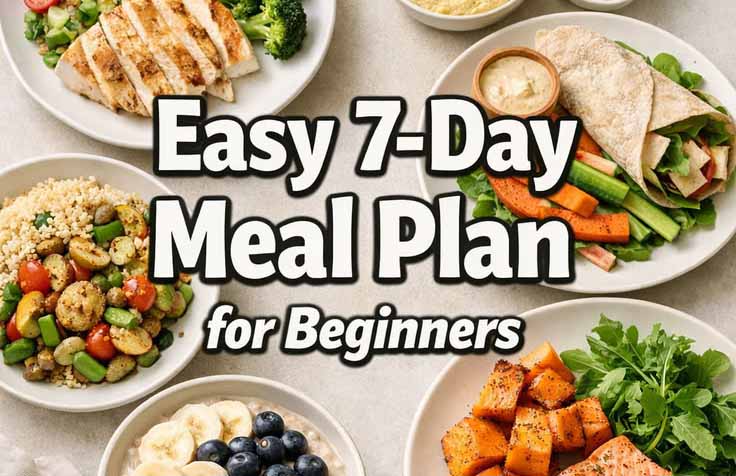
Day 1: Simple Reset
Breakfast (395 cal): Greek yogurt (7oz), mixed berries (½ cup), walnuts (1 oz), ground flaxseed (1 tbsp)
Lunch (425 cal): Grilled salmon (4oz), mixed green salad, chickpeas (½ cup), avocado (¼), olive oil vinaigrette
Snack (185 cal): Hard-boiled egg, small apple
Dinner (510 cal): Baked chicken breast (5oz), roasted broccoli (2 cups), cooked quinoa (½ cup), drizzle of olive oil
Total: ~1,515 calories
Day 2: Soy Focus (Hot Flash Relief)
Breakfast (370 cal): Tofu scramble (4oz) with spinach, mushrooms, whole-grain toast (1 slice)
Lunch (440 cal): Edamame and quinoa bowl with bell peppers, cucumber, sesame seeds (1 tbsp)
Snack (160 cal): Two clementines, 1 oz almonds
Dinner (530 cal): Grilled trout (5oz), roasted asparagus (2 cups), wild rice (½ cup)
Total: ~1,500 calories
Day 3: Gut Health Day
Breakfast (350 cal): Kefir smoothie—kefir (1 cup), frozen mango, chia seeds (1 tbsp), honey (1 tsp)
Lunch (455 cal): Mason jar salad—roasted beets, goat cheese (1 oz), grilled chicken (4oz), mixed greens, olive oil dressing
Snack (165 cal): Plain Greek yogurt (6 oz), granola (2 tbsp)
Dinner (520 cal): Turkey meatballs (4oz) with marinara, whole-wheat pasta (¾ cup), roasted Brussels sprouts (2 cups)
Total: ~1,490 calories
Day 4: Mineral Boost Day
Breakfast (380 cal): Oatmeal (½ cup dry), almond milk, banana, almond butter (1 tbsp), flaxseed (1 tbsp)
Lunch (420 cal): Tuna salad (3 oz canned, in water), mixed greens, walnuts, olive oil dressing, whole-grain cracker (4)
Snack (185 cal): Hard-boiled egg, orange
Dinner (540 cal): Baked cod (5oz), roasted sweet potato (1 medium), steamed broccoli (2 cups), olive oil
Total: ~1,525 calories
Day 5: Lean and Light
Breakfast (400 cal): Cottage cheese (1 cup), berries (½ cup), walnuts (½ oz), granola (2 tbsp)
Lunch (430 cal): Grilled chicken (5oz), Mediterranean salad with feta (½ oz), olives, tomatoes, olive oil
Snack (160 cal): Apple with 1 tbsp almond butter
Dinner (520 cal): Ground turkey (4oz) tacos in lettuce wraps, salsa, avocado (¼), side of black beans (½ cup)
Total: ~1,510 calories
Day 6: Legume Day
Breakfast (370 cal): Tofu scramble with peppers, onions, whole-grain toast (1 slice), avocado (¼)
Lunch (445 cal): Lentil and vegetable soup (2 cups), grilled chicken (3oz), side salad with oil and vinegar
Snack (155 cal): String cheese, pear
Dinner (535 cal): Baked salmon (5oz), roasted carrots and green beans (3 cups), brown rice (½ cup)
Total: ~1,505 calories
Day 7: Flexible Favorite
Breakfast (395 cal): Scrambled eggs (2), whole-grain toast (1 slice), sautéed spinach, berries on the side
Lunch (425 cal): Grilled shrimp (4oz), quinoa (½ cup), roasted vegetables, olive oil, lemon
Snack (180 cal): Greek yogurt (6oz), small handful of dark chocolate chips
Dinner (520 cal): Baked chicken (5oz), sweet potato (1 medium), steamed broccoli (2 cups)
Total: ~1,520 calories
Real Results You Can Expect
Here is the honest timeline. You will not lose 5 pounds in week one. That would just be water, and it is not safe or long-lasting. Here is what you will notice.
Days 1 to 3: Less bloating. Steady energy. Fewer cravings. Days 4 to 7: Better sleep. Clearer thinking. Hot flashes happen less often and feel less strong. Weeks 2 to 4: Your body shape changes. Clothes fit differently even if the scale stays the same. Your mood is more stable, and you have more energy. Weeks 4 to 8: You see fat loss. Your muscles look more toned. Your symptoms stay better.
Common Questions
Q: Can I drink coffee on this plan? Yes, one cup a day is fine. Drink it in the morning. More than that can trigger hot flashes for most women. Skip the sugary syrups.
Q: What if I’m vegetarian? Swap meat for extra tofu, tempeh, beans, Greek yogurt, and eggs. Keep protein at 25 to 30g per meal. You may need to double your plant protein portions.
Q: Is this plan expensive? No. Eggs, chicken, frozen vegetables, canned fish, dried beans, and oats are all cheap. Skip the organic items if money is tight. Regular produce still has plenty of nutrients.
Q: Can I have dairy if I’m lactose intolerant? Yes. Use lactose-free milk. Hard cheeses have less lactose. Or try plant-based milks. Do not cut out dairy unless you have to—it gives you key calcium.
Q: What if I’m not losing weight after two weeks? Drop to 1,500 calories for a bit. Make protein 35% of your daily intake. Add a 20-minute walk each day. If nothing changes in another week, talk to your doctor about your thyroid.
The Bottom Line
Your body did not betray you during menopause. You just needed new instructions. This meal plan works because it fits what your body needs right now. It is not a generic plan made for 25-year-olds. It saves your muscle, steadies your blood sugar, helps your symptoms, and lets you lose fat slowly without the hunger that makes menopause worse. Print this out, use it for two weeks, and see how you feel.
Most women tell me the same thing: “I forgot what normal energy felt like.” That is what this plan gives you. You have got this.
References
Kronenberg, F. (2011). “Menopausal hot flashes: Epidemiology and physiology.” Annals of Internal Medicine, 154(12), 837-847.
North American Menopause Society. (2022). “Menopause guideline.” Menopause: The Journal of the North American Menopause Society.
Messina, M. (2016). “Soy and health update: evaluation of the clinical and epidemiologic literature.” Nutrients, 8(12), 754.
Recommended Article
Soft Food Diet: What Actually Works (And What Nobody Tells You)
12 High Blood Pressure Diet Tips That Actually Taste Good
The Whole Foods Diet for Real People: 10 Swaps That Actually Stick